How To Plan Waldorf Homeschool Second Grade: PART ONE

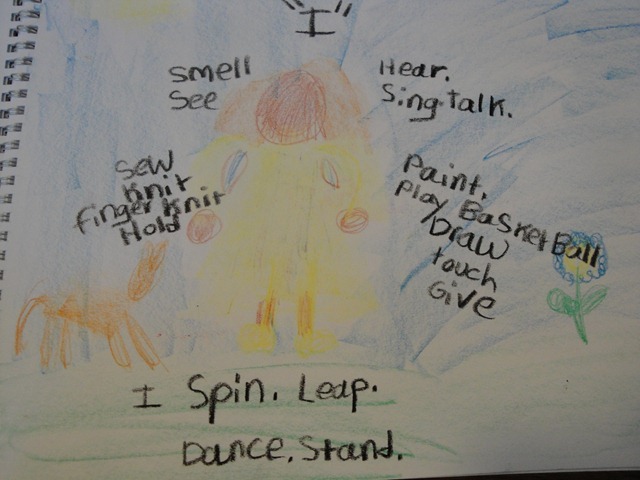
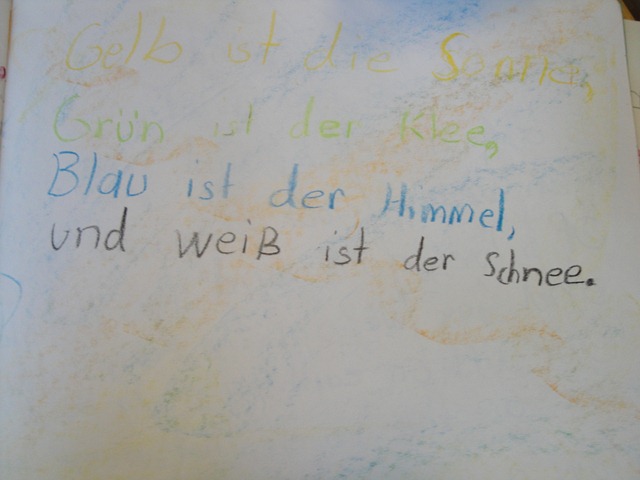
I broke my no-photograph rule to post a few pictures from our Second Grade Main Lesson books…there really don’t seem to be many Second Grade Waldorf blogs out there and I wanted you all to see some examples from our work.

Below you will find the resources that I used for each block; you can also see this back post that talks about Second Grade resources  here:

Resources:  https://theparentingpassageway.com/2010/03/19/peaceful-homeschooling-resources-for-waldorf-grade-two/

Planning (two posts, one here and one link embedded in this post):  https://theparentingpassageway.com/2010/03/05/peaceful-days-more-about-homeschooling-waldorf-second-grade/

Handwork:  https://theparentingpassageway.com/2010/04/22/waldorf-second-grade-handwork/

Let me make it very, very clear that I think you could focus on animal fables and legends and not do Saints at all.  I liked Saints for  my oldest, for this particular child,  so I included them.  Also, our year was more weighted toward math than language arts because that is what my child needed. Also,  know every day had movement, modeling was often included in the Main Lesson so not mentioned separately here, and handwork took place every week along with Spanish and German, and math happened nearly every day during non-math blocks for practice unless we were letting it rest…

Thanks to Lovey for taking these pictures!  Many of you remember Lovey!

I actually took a few of the pictures as well!  A miracle for me!

September: Form Drawing and Math; I took the forms from a variety of resources and used some Cherokee Trickster tales to set the stage.  The forms this year included running forms and vertical  forms  with a midline drawn and a midline present but not drawn.  Math was taken from Melisa Nielsen’s Math Ebook and Donna Simmons’ Second Grade Math book:

clip_image001[16]

clip_image001[18]

clip_image001[22]

We also celebrated Saint Michael and Michaelmas, baking, singing and pennywhistle.  We did wet on wet painting of the geometric shapes from Donna Simmons’ Second Grade Math Book.

October: LA Block, Aesop’s Fables – find free on Internet and flesh out for three-day rhythm (look at Marsha Johnson’s files for examples at waldorfhomeeducators@yahoogrous.com); continue with daily Math and weekly Form Drawing, singing and pennywhistle

clip_image001[4]

 015

November:  Math, resources as above, kept circling back to place value, carrying and borrowing; the story of Saint Martin and some other Saint stories at the end of Math lessons.


017


December:  Saint Nicholas – many free resources on the Internet for this one- and Saint Francis and Clare (we did a very BIG wall mural); Santa Lucia, poetry; daily math, singing and pennywhistle


008


Keep it simple;  you are teaching through art as your vehicle but the skill development is still there!  You must know where your child is and what you are trying to accomplish in terms of skills, and then how do I bring that actively within the things that speak to the soul development of the eight-year-old.  And don’t forget your singing, handwork, painting, modeling, games and movement!

Blessings,

Carrie

More Christian Resources for Your Waldorf Home!

(Hi, If you are not Christian, you are not left out today!   I still have a little thought for you at the bottom that you can meditate on, so please keep on reading or at least jump down to “The Question” at the bottom of the page!)

(These resources are more general Christian resources and not specific to one denomination; please see past posts for some wonderful Roman Catholic and Orthodox Christian blogs I love for direction there….  And do go over and join Elizabeth Foss on her Kind Conversation forum for wonderful ideas as well.  Many blessings.)

Update 2011 We have since switched to an Episcopalian parish, so some of these links are no longer pertinent to our family but perhaps will be to yours..

I don’t always write too directly about my personal faith.  However, for those of you seeking Christian Resources for your homeschool adventure, I have written several posts with different resources in the past regarding this subject, but I want to keep adding more so you all can add resources to your own files to use.

You might remember this post where I discussed what we using for our morning, lunch and bedtime devotion time here:  https://theparentingpassageway.com/2009/08/21/summer-planning-christian-education-for-the-waldorf-home/  Would you all believe we are STILL not through our bedtime bible stories as mentioned in this post?  I probably won’t know what to pick after we are done with that one!!  I wrote a follow-up to that post here:  https://theparentingpassageway.com/2009/09/21/a-new-christian-resource/

So, here is my update!  For our mornings, we finished “Step Into the Bible:  100 Bible Stories for Family Devotions” by Ruth Graham.  This book is about 220 pages long, and each day is a glossy photographed two-page spread with a reference to a passage in the Bible, a Memory Verse (we picked one for a week), and questions for understanding which I think would be great with the grades-age child and with a child under the age of 7 I would just let them hear and absorb and not use the questions. 

We then used the book, “Five-Minute Devotions for Children:  Celebrating God’s World As A Family” by Pamela Kennedy with illustrations by Amy Wummer.  This book is 47 pages long with a two-paged spread for each day, so my main complaint is that everyone LOVED this book and it was too short!  The Biblical theme is related to an animal of the day.  There are a few questions, but many of the questions involved finding something in the illustration, and the other questions were about either the animal or the Biblical theme.  There is also a Bible verse you could memorize.  (Again, we picked one Bible verse for the week, and we limited the “understanding” questions to our grades-age child).

So this is where we are now:  “The Big Book of Animal Devotions:  250 Daily Readings About God’s Amazing Creation.”  I don’t like it as much as the other animal devotion book; the animal descriptions are pretty detailed and the tying in to God’s word seems short. However, we are only seven days into this book, so I will let you know as we go along!

I am enjoying praying along with The Anglican Office of the Day (Grandpa is an Episcopalian priest, so we have a long Anglican history in our family). Here is a link for those of you seeking:  http://www.commonprayer.org/offices.cfm    We also are enjoying the feasts, fasts and Saints found here:  http://www.churchpublishing.org/products/index.cfm?fuseaction=productDetail&productID=473 

I am also enjoying these simple Bible verses for my little one:  http://totallytots.homestead.com/InMyHeart2.html  Thank you to Kara at Rockin’ Granola for pointing this blog out to me! 

I am currently reading  “The Hole In The Gospel.”   This is a very, very interesting, emotional read about a man who was CEO for Lenox (fine china) and is now CEO of World Visions, a nonprofit organization.   All of you who read this blog can probably guess I have a big heart for helping people, and I have a big heart for children and their parents.   I have been looking at different mission ministries that really help children and their families. We are currently attending a non-Anglican church and  I really appreciate our current denomination’s long history of mission work and their emphasis on respectful interaction with the culture in which they are sharing.  (Their principles are here:  http://www.rca.org/Page.aspx?pid=5858)  That is on my mind as well…. ..just waiting for my children to grow. 🙂

Here is a great FREE resource from an evangelical mission-minded blog  that was meant for around New Year’s to really  help you check in, to really  take stock and see where you are, where your life is, but I think it could be used any time that you would like to stop and assess where your life is.  Here is the link: http://harvestministry.org/wp-content/uploads/2009/12/2010-mission-7.pdf     I printed this out and put it in my Homemaking Journal (you can see what else I have in my journal here:   http://theparentingpassageway.com/2009/11/22/my-notebook/  – much of my Homemaking Journal is still the same as when I wrote this post, only a little bit has changed! I will update you all on that at some point soon!)

Whilst my husband and I work to impact our local community, I would like for our family to think “more internationally” about children and parents whose community could use help as well.  A friend recommended this organization to us, so we are checking it out: http://www.compassion.com/  I am kind of torn between something like this and supporting a specific missionary for our own denomination like this:   http://www.rca.org/Page.aspx?pid=1552

So there are some resources in as close to a nutshell as I could muster 🙂

THE QUESTION FOR ALL:

So here is my question for all of you to meditate on today:  What are the most essential priorities in your life, and does your life reflect your essential priorities?  Could your children pick out your priorities by what you are MODELING for them (not your words, your actions!)  If not, what could you do to change your  life and activities so it matches your values even better?

Many blessings to you all,

Carrie

Tips Regarding Math in Waldorf Grade One

Hi all!  This is a primer for those of you preparing for Waldorf Grade One next year and the math portion of it, and a few hints for those of you doing Waldorf Grade One right now.

First of all, I think math as very, very important.  I think it is almost more important than reading at this early age because  1 – our society in general is more geared toward alphabet literacy rather than numeral literacy (unlike countries such as Singapore) 2 – the eye fully develops for tracking around age 8, so many of you have time in the future for neural maturation that will improve reading between the ages of eight and ten (and I am not saying do not focus on reading or writing, I am just saying we tend to put math on a back-burner) 3 –there does appear to be a drawing of teachers and homeschooling mothers to Waldorf Education who are artistic, creative, readers and writers but who do not love math and science.   This should make us doubly aware to include math and science in our Waldorf homeschool experiences.

For more regarding Math Phobia please see here: https://theparentingpassageway.com/2010/03/15/math-phobia-in-the-waldorf-homeschool/ 

Here are a few suggestions for planning:

For those of you planning Grade One for fall, here is a suggestion:   I like to put the Quality of Numbers block in November before Thanksgiving (that is introducing the qualities of numbers 1-10 or 12), and move into the four processes the week after  Thanksgiving and throughout December.  So, approximately a six-week block on the Quality and Quantities of Numbers.

Then, once you come back from a Winter Break, jump into that third Math block early in the Spring to really practice those four processes.  You could even add a short fourth block somewhere in later spring.  I really do like Donna Simmons’ last math block in her First Grade Syllabus.  It uses fairy tales from different countries to practice the four math processes.  At the very least, it may stimulate your own thought process! 

Another good thing about  introducing the four math processes in the fall is that one can then  practice math every day during non-math blocks during the Spring.  Counting, skip counting, and estimating can be done every day after the qualities of numbers are introduced.

For those of you in Grade One who are  just introducing the four processes this month,  (and I do hope you have another math block to go to really work with a deepening of the four processes), I have some ideas for you:

-Daily math practice for the remaining time you have if you have any non-math blocks left.

-Make your Second Grade math heavy with more blocks based around math than language arts, and to really accelerate math practice.  Practice estimating, counting, the four processes in life, in everyday activities.  There are many resources for integrating math into everyday life.

-Here are Math Goals from Ron Jarman for Grade One:  https://theparentingpassageway.com/2009/03/29/ron-jarmans-math-goals-for-waldorf-grade-one/

Jamie York says these are Grade One math goals:  (this list is much simpler, Jarman tends to be more advanced.  For greater details as to York’s math goals, please do see his First through Fifth Grade Book that actually has a great deal of detail in it as to progression of learning addition and subtraction facts and more.  It is not nearly as simplistic as laid out here):

“– First Grade  

Quality of numbers.

Counting forward and backward up until 100.

Number dictations.

Rhythmical counting.

Estimating.

The four processes – introduction.

Learning the “easy” addition facts.”

So, I think the main goal for you between now and the end of the school year would be the two, fives and tens times tables and addition facts at least up to 12 to know cold  (and introduce them up to 20!)  Subtraction facts are  usually the goals that hang children up, so put some extra attention to those facts as well.  Movement and games are important.

Feel free to leave me a comment and agree or disagree (pleasantly, LOL) with me!!

Love to all and happy math!  I will post the math goals for Grades Two and Three soon!

Blessings,

Carrie

Music Curriculum for Recorders

Jodie Mesler is back with Volume 2 of her music curriculum…Her curriculum works with recorder, Choroi flute or pennywhistle.  Here is what she says about her latest work:

Living Music From the Heart: Music Curriculum
Volume 2 

by Jodie Mesler

Living Music From the Heart: Music Curriculum Volume 2 is a playful and artistic teaching method that is for everyone, for experienced musicians, as well as for teachers with little or no music training, giving all very easy and pleasurable experience. For the in-experienced musician, you find how easy it is to sing and how to play music with the aid of the DVD tutorial and lesson book. For the experienced musician, you will find many helpful tips on how to teach your child in a more playful and fun way, very different from the strict academic methods of our youth. Your child must be at least seven years old, because this approach is for children in the grades. It is a primer method and anyone can start here to begin their very first musical instruction. Twenty lessons are included with techniques, games and over 50 simple pentatonic songs for you to enjoy.

The music lessons are set up so that children learn music by listening and imitating the teacher, therefore, you will learn how to read music notation in my next volume which will be specifically designed for children 9 years or older. Here you will get ideas on how to integrate singing, rhythms, games, and songs in a creative and playful way. My approach is based on the study of human development, inspired by a love of music, and has a deep respect for the way children learn. My method is for those who long for a more nurturing and living way of learning and teaching music, remembering that music is the language of the soul. In Living Music From the Heart Volume 1, the primary focus was on pleasing sounds, rhythms, and listening skills taught through imitation. In grade 2, it is time to learn simple pentatonic songs. By staying simply within the 5-note scale pattern, music becomes fulfilling and enjoyable. For the child we will weave in playing high and low, slow and fast, soft and loud, long and short. We will guide and inspire the child to have great technique through these songs and games as we teach him how to tongue, slur, listen, and make up his own songs.

I think the most important thing to remember during the training of using a starter blowing instrument, such as the penny whistle, is that you are working with the heart area. Your child is in the second stage of human development which is the heart and imagination stage. In that heart area, the lungs are also being developed and that is one of the reasons why Rudolf Steiner, founder of Waldorf Education, recommends a blowing instrument. Waldorf Education is the education which has inspired me to write a music method based on my years of research of this education, and based on my experience teaching private music lessons.

Steiner states in his lecture from The Kingdom of Childhood, “As early as possible the children should come to feel what it means for their own musical being to flow over into the objective instrument…if you can you should choose a wind instrument, as the children will learn most from this and will thereby gradually come to understand music… the human being feels the whole organism being enlarged. Processes that are otherwise only within the organism are carried over into the outside world.” Steiner also states in his lecture from The Foundations of Human Experience, “in these years (7-14 years old) we must always take care that, as teachers, we create what goes from us to the children in an exciting way so that it gives rise to the imagination. Teachers must inwardly and livingly present the subject material; they must fill it with imagination.”

Here is a complete overview of the lessons:

SONGS

  1. My Fingers Are Dancing
  2. Jack Be Nimble
  3. Like the Turtle
  4. Hush Little Baby
  5. One, Two, Buckle My Shoe
  6. Inch Worm
  7. Five Little Pumpkins Sitting on a Gate
  8. Little Miss Muffet
  9. Thunderstorm
  10. Old MacDonald
  11. Peter, Peter, Pumpkin Eater
  12. Tick Tock, Hear the Clock
  13. There Was a Man and He Was Mad
  14. Jack Sprat
  15. Jolly Old St. Nicholas
  16. Star Light, Star Bright
  17. A Song From My Heart
  18. Mary Had a Baby
  19. Little Jack Horner
  20. Turn Into Light
  21. Morning Song
  22. Polly Put the Kettle On
  23. Whisper Then Shout
  24. Shortnin’ Bread
  25. Little Poll Parrot
  26. Jogging With My Doggy
  27. Did You Go to the Barney?
  28. Georgie Porgie
  29. Clap With Me
  30. Little Liza Jane
  31. Little Robin Redbreast
  32. Swing Your Partner
  33. A Frog Went A-Courtin’
  34. Mary, Mary Quite Contrary
  35. Crocuses
  36. In the Springtime
  37. Humpty Dumpty
  38. Hot Cross Buns
  39. Johnny Get Your Haircut
  40. March Winds
  41. The Tooth Fairy
  42. Ducks in the Mill Pond
  43. It’s Raining, It’s Pouring
  44. The Dance
  45. Bought Me a Cat
  46. Little Tommy Tittlemouse
  47. Willow Tree
  48. Run, Chillen, Run
  49. High Diddle, Diddle
  50. Goodbye Old Paint
  51. Hickory Dickory Dock
  52. Fresh Tomatoes
  53. The Farmer in the Dell
  54. A Wise Old Owl
  55. We Are One Big Family
  56. The Crawdad Song

TECHNIQUES

  1. long tones
  2. pentatonic scale D, E, G, A, B, D’, E’, G’
  3. tonguing
  4. slurring
  5. rhythms
  6. improvisation
  7. high to low
  8. low to high
  9. descending
  10. ascending
  11. building a repertoire
  12. long tones and short tones and rests
  13. measuring tones
  14. tempos; slow, moderate, fast
  15. soft and loud
  16. swinging tempos

GAMES

  1. Blow Dragon Blow to strengthen lungs and build strong long tones
  2. Call & Response to fine tune rhythms and techniques
  3. Fix Your Leaky Tire to work on proper hand position
  4. High to Low or Low to High? learning how to hear the differences in tones
  5. Blowing Up Balloons to strengthen lungs and build strong long tones
  6. The Stopwatch Challenge to strengthen lungs and build strong long tones

Joyfully Creating,

Jodie Mesler

Music Curriculum Tutorial for penny whistle or recorder now available at:
http://homemusicmaking.com

Hope that helps some of you in your planning for fall!

Blessings,

Carrie

Musings for Waldorf Third Grade/Fourth Grade

So, I am planning for homeschooling Waldorf Third Grade right now………

and I am glad I have started early.  There is a lot to figure out!

Many people talk about how Third Grade is the year of “doing” and how things in Fourth Grade really shift.  I actually see a bigger  shift occurring  in Fifth Grade, with the start of ancient history and such, with first through fourth leading up to this point in tracing human consciousness and evolution.  So,   I actually am planning Third and Fourth Grades together so they flow nicely.

This came about because I feel one has some decisions to make regarding Third and Fourth Grade:

1.  Do you want Third Grade to be the year of the Old Testament stories (Eugene Schwartz, Eric Fairman) or include Native American stories as well  (Melisa Nielsen, Donna Simmons)?

2.  Where will you put Native Americans? In with the Third Grade building block?  In with gardening in the Third Grade?  In with local geography in the Fourth Grade?

3.  Do you want to split the Old Testament Stories up between Third and Fourth Grade?  Donna Simmons makes an argument for that here:  http://christopherushomeschool.typepad.com/blog/2009/06/ot-stories-again.html

4.  What about those Norse myths – do want a shorter block of those, several blocks throughout the year, do you want to do any part of The Kalevala?  The Norse myths are dark, good for a TEN-year-old, do you want to put them toward the end  of Fourth Grade depending upon your child’s birthday?

5.  In Fourth Grade, do you want to bring in US Geography along with local geography?  I have heard good things about the way Melisa Nielsen approaches local geography in her Fourth Grade curriculum guide, and I like how Donna Simmons lays out her approach to geography through the grades here:  http://www.christopherushomeschool.org/waldorf-homeschool-publishing-and-consulting/curriculum/subjects/geography.html

According to “The Waldorf Curriculum Chart”  I have hanging on my wall, the following areas are typically covered in Third Grade:

  • History- Biblical stories as part of Ancient history and American Indian tales and fables.   History in the Fourth Grade includes  local history, why the early settlers chose your geographic location to live, how they developed the natural resources
  • You can see more about literature and skill development throughout the grades here:  https://theparentingpassageway.com/2010/03/10/history-and-literature-waldorf-homeschooling-grades-one-through-twelve/
  • Math – times tables, prime numbers, carrying and borrowing, problems in time and more goals are listed in other Waldorf math resource books (remember this is just a little chart with boxes!)
  • Housebuilding, farming, clothing are mentioned along with studies of the cycles of the year, soils, farm life, grains, vegetables and fruits, practical work in a garden, introducing colored pencils for writing (my daughter’s handwriting is exceptionally good so we probably are going to go with a fountain pen at this point), crochet work, forest walks and stories about trees and forests as an introduction to woodworking, beginning an instrument, lots of games and more!

Lots to think about!  Start now!

Blessings,

Carrie

Waldorf Third Grade Student Reading List

Most students in Waldorf Third Grade are 8 and a half or nine years old.  They should be this age!  The third grade curriculum is designed specifically to speak to the developmental issues surrounding the nine-year change.  There are quite a few articles on this blog regarding the nine-year old if you need to look those up!  If your second grader is doing “third grade academics”, so be it, but please let the fables, folktales, Native American tales be the conduit to carry these pieces until they are eight and a half or nine and then ready for those Old Testament Stories!

Here are some suggestions for Third Grade Reading; most of these are geared toward a child who is close to nine or at that nine-year-old change.  The themes may be too much for children under nine, so please pre-read if your children are not yet nine!  Also,  please feel free to add your suggestions via the comment box below!

  • Mr. Popper’s Penguins – Atwater – always a fun story to re-visit even if you have done it before!  Children like repetition!
  • The Wizard of Oz series – Baum (and this may be early for the whole series, my 13 year old daughter is reading the entire series now and really enjoying them; there is violence and such so pre-read!)
  • Burgess – Nature Stories
  • Carpenter- Tales of a Korean Grandfather
  • Dahl, Roald – Matilda, etc. (This recommendation came from the “Waldorf Student Reading List” book- I personally don’t really like Roald Dahl’s work).
  • Holling C Holling – The Book of Indians
  • Juster – The Phantom Tollbooth (which I also like in Fourth Grade and Fifth Grade math blocks, so you might consider saving)
  • Kipling – Just So Stories, The Jungle Book
  • Ursula Le Guin – Catwings series
  • Osborne – American Tall Tales
  • Patterson – Angels, People, Rabbis and Kings from the Stories of the Jewish People
  • Chief Seattle’s Brother Eagle, Sister Sky (may want to preread, I have heard this is a tear-jerker!)
  • EB White – Stuart Little, Charlotte’s Web, The Trumpet of the Swan
  • Isabel Wyatt-  King Beetle-Tamer and Other Light-Hearted Wonder Tales, The Book of Fairy Princes
  • Ella Young- Celtic Wonder Tales, The Tangle-Coated Horse
  • Tove Jansson’s Moomintroll Series – either you love ‘em or hate ‘em; we love ‘em!
  • Rafe Martin’s The Boy Who Lived With Seals, The Brave Little Parrot
  • Meindert De Jong – The Wheel On the School (which you might consider saving for fourth grade for your Man and Animal block)
  • Brian Jacques – Redwall series
  • Susan Kantor’s One Hundred and One African-American Read-Alouds
  • Adele Geras – My Grandmother’s Stories:  A Collection of Jewish Folktales
  • Elizabeth Shub – The White Stallion
  • Phil Strong – Honk the Moose
  • Margaret Stranger – That Quail, Robert
  • Ethel Cook Eliot – The Wind Boy and others
  • E. Nesbit – Five Children and It and others
  • Farley Mowat – Owls in the Family – funny!
  • Donald Hall – Ox Cart Man – should be part of reading in your Farming Block along with “Farmer Boy” by Laura Ingalls Wilder
  • Noel Streatfield – Ballet Shoes and others
  • Dorothy Canfield Fisher – Understood Betsy
  • Carol Ryrie Brink – Caddie Woodlawn
  • Arthur Ransome’s Swallows and Amazons series
  • Astrid Lindgren – The Adventures of Pippi Longstocking – the reason we put these books around the nine-year-change is the lack of parents and Pippi as a strong individual character.
  • Selma Lagerlof’s The Wonderful Adventures of Nils
  • Elisa Bartone- Peppe the Lamplighter
  • Elizabeth Orton Jones – Twig – If you read it before, you can go back and re-read it!
  • Valerie Flournoy – Patchwork Quilt
  • Lois Lenski – Strawberry Girl, Texas Tomboy, etc.  I personally would hold off on these until at least fourth or fifth grade and perhaps tie them in with North American Geography for fifth grade, but up to you!
  • Robert Lawson – Rabbit Hill (pre-read)
  • Astrid Lindgren – Ronia the Robber’s Daughter  – I also like in fourth grade to tie in with map making but could be okay for third grade reading.  Pre-read and see what you think
  • Alice Dalglish’s The Bears in Hemlock Mountain
  • Johanna Speyri- Heidi
  • Anything by George MacDonald
  • Chronicles of Narnia Donna Simmons recommends for those 10 and up, but The Lion, The Witch and The Wardrobe might be okay for a nine-year-old.  I suggest waiting on JRR Tolkien.  Some children devour “The Hobbit” between the ages of 9 or 11, but my very avid 13 year old readers has started this book four times and has never gotten through it and finds the language hard to read.  So, do what you think is best!
  • Marguerite Henry’s horse books
  • Geraldine McCaughrean’s The Crystal Pool, The Golden Hoard, The Silver Treasure
  • Robert McClosky – I still love these, One Morning in Maine and the like and Homer Price and others are good for a nine-year-old.
  • Jospeph Bruchac – preread!   Donna Simmons recommends “Children of the Longhouse”
  • Enid Blyton –
  • George Seldon’s “Cricket in Times Square”

Again, please add your favorites at the bottom!  And please do pre-read, you know  your child best!

There is a comment below about Percy Jackson. I would not recommend these for third graders as the main characters are teens, the books are heavy on references to Roman Mythology which comes in the sixth grade curriculum in Waldorf, and there is violence.  I would put that series as reading for middle schoolers.


Blessings,

Carrie

Grammar In The Waldorf Curriculum

This morning Mrs. Johnson posted a wise response on her list (waldorfhomeeducators@yahoogroups.com – please join if you are not on this list) to a mother.  This is a post regarding spelling/ grammar within the Waldorf Curriculum:

“Waldorf is just so different, often. This is one of those areas.
Here are a couple insights to get you thinking inside the Waldorf box.

1) the spelling words come from the curriculum. They are part of the block, part of the ‘story’, part of the telling you are doing in your story-sharing time. They are not ‘disconnected’ random words. They certainly can lead to word family lessons and discussions to cement and explore spelling and phonemes. So the grade three child is hearing the Old Testament and the Practical Arts block stories all year long and the spelling words come from these areas.

2) the grade three child learns about Naming words (nouns) and Doing words (verbs), most often in the telling of the story of Creation as Adam names each animal as they are created.
You are Rabbit! Rabbits jump!
You are Goat! Goats leap!
You are Snake! Snakes slither.
You are Fox! Foxes slink.
And so on. Simple Naming and Doing, great basis for movement exercises, too.
3) In the grade 4, we begin with the nine parts of speech. We bring this from the Nine Worlds of the Norse gods, the Nine Days that Odin hung on the tree to obtain the ability to write, and the inclusion as we can see for that post-nine year change child of being able to step back and divide things into their parts now….fractions, music, and so on. So we have the ability to divide a bit and that is when we bring the Nine Parts of Speech. But we do this with games and directly from the curriculum as well.
He is Odin.
He is the wise Odin.
He is the wise Odin who sees.
He is the wise Odin who sees so clearly.
He is the wise Odin who sees so clearly and speaks so calmly.
etc etc

Dissecting abstract language concepts into diagrams is meant for the middle school child. The younger ones need to stay in their imagination and in the story of the moment. We can see with each Norse god, unique characteristics that create a personality and a ‘type’. This is also true of our spoken language, each one has a personality and even a culture embedded in every single sound. Some languages do not have all the elements of English, others do. In some, the word order is quite different. In English we say I I I at the first, I am the most important. In others, the I is hidden or unspoken or ignored….

Children can be taught many things. We know this, but it is HOW we bring it that makes it Waldorf or not. Creating images, living pictures, in our hearts before we bring it to the children is very important.

For example….why are some verbs regular and others not? What are irregular verbs like, then> I am, you are, he is, she is, we are, they are………why, they are a bit individualistic aren’t they? Yes, why they are quite independent and not very easy to rule over, they are like the sons and daughters of Moses who don’t really pay attention to what he says when he is not there! They go their own way…and over here, so many good little words….I fly, you fly, he and she fly, we fly and they fly. Good little fly, way too obedient! Good two shoes? Or a good student? Always minds his manners, that fly.

And so we can see, can we create a town or a land where these characters live, some decent and easy to understand, others quite persnickety and rebellious but cute as bedbugs! Little rascals. Well we must make friends with them all, shan’t we?

Yes, bring in the materials, but do bring it on a platter of the imagination and this will create in the child a mood of play and drama and pure fun.
Mrs M”

Hope this brings blessings to you,

Carrie

Readiness for Waldorf Homeschool First Grade

Planning away yet? It is that time of year!   For those of you with six- year- olds who are considering starting Waldorf first grade in your  fall homeschool, this is an important decision.  The standard “rule” in Waldorf education is that your child should have been alive for seven springs/seven Easters  before starting first grade.  I highly recommend starting first grade when your child is as close to seven as possible, so that your child is seven for most of first grade.

There are several reasons I recommend this, and you can agree or disagree.:)  Homeschooling is much different than Waldorf school, as there is no group or older children in the class to “carry” the younger six-year-old at home.   The second  issue with starting first grade at an early age  six, then second grade at an early age seven and third grade at an early age eight  means that you are basically off a year in the Waldorf Curriculum.  The Third Grade’s Old Testament stories are really for a nine-year old, that whole third grade year is to speak to the nine year old change.  The Norse myths of Fourth Grade are pretty dark and are really  best for a child past the nine year change or pretty darn  close to it.  I think the children who are past the nine year change handle the Norse myths better than the ones who have not…just my limited experience.

The last reason for starting first grade at six and a half at the earliest and as close to seven as possible, is that, I hate to see the end of this cycle “cheated” out for lack of a better word.  The first seven years of really being in  the body will lead to greater academic success later on…If parents need help for more ideas for the six year old year, I am sure we can all contribute ideas!

Here are some articles regarding First Grade readiness:  http://www.waldorflibrary.org/Journal_Articles/firstready.pdf

And here:  http://www.waldorflibrary.org/Journal_Articles/Gateways56FINALDRAFT.pdf

And here:  http://www.christopherushomeschool.org/learning-more/articles-on-aspects-of-waldorf-education/articles-by-donna-simmons/first-grade-readiness.html

http://www.christopherushomeschool.org/learning-more/articles-on-aspects-of-waldorf-education/first-grade-readiness-help-your-child-by-getting-the-timing-right.html

Here is a whole book on the subject: http://www.steinercollege.edu/store/product.php?productid=18362&cat=845&page=1

Here is a list and I cannot figure out where I originally found it, so I can’t link you to it; I hope it is okay to reprint it here……

First Grade Readiness Guidelines


Bodily Proportions and Characteristics

  • Head to body ratio of 1:6
  • Loss of baby fat and the “pot belly”
  • First stretching growth of legs
  • Waist and neck incisions in the trunk
  • Visible joints (knuckles) and kneecaps instead of dimples
  • Arch in foot
  • Individualized facial features instead of baby features (a child who has not been able to undergo childhood diseases may be hindered in this development)
  • S curve in spine

Second Dentition

Usually a first grade child should have at least one loose tooth.  (If both parents, however, were very slow in reaching dentition, this factor should not be weighed as heavily for this particular child)

Physical Abilities

  • Walk a beam, log (or line) forward
  • Catch and throw a ball
  • Hop on either foot
  • Bunny hop (both feet together)
  • Habitually walk in cross pattern (i.e. swing opposite arm when stepping out with one foot)
  • Climb stairs with alternating feet on each stair
  • Tie knots and sometimes bows; button and zip own clothing
  • Use fingers dexterously (sew, finger knit, play finger games, etc.)
  • Have established dominance (eye/hand dominance most important) though this may not be firmly established until age 9
  • Not be unduly restless or lethargic
  • Shake hands with thumb separated from fingers rather than offering the whole hand

Social/Emotional Development

School ready child develops feelings for others’ needs – social awareness, doing things for others, goal oriented play – planning, thinking things out; does not need objects in play (can now visualize play rather than needing to collect many items as younger children did; this shows separation of concept – the inner world – from precept – the outer world); begins long term friendships; play of horses and dogs (shows readiness for authority of first grade, obeying a master”)

Other social/emotional abilities:

  • Ability to join in offered activities
  • Ability to look after own eating, drinking, washing and toileting needs
  • Ability to share a teacher’s or parent’s attention and wait for a turn
  • Ability to follow instructions and carry through a task or activity
  • Not unduly dependent on a security item (thumb sucking, blanket, etc.)
  • Not regularly the aggressor or victim; accepted by most other children

Drawing and Painting

Conscious goal in drawing pictures

In painting becomes goal conscious, attempts forms or special effects such as dots; paintings become stiffer, less beautiful for a time but may free up again a child consciously discovers how to mix and blend colors and develops designs or forms appropriate to the medium; symmetrical designs similar to crayon drawings may appear

Content of Picture (Primarily Drawings)

Two-fold symmetry, indicating that two-fold function of the brain has come about; symmetrical houses, often with a tree or flower on each side; symmetrical designs in which the paper is divided into halves; symmetrical color arrangements

Change of teeth pictures, containing horizontal repetitions such as birds flying, rows of mountains, etc. reminiscent of rows of teeth

Strip of sky and earth, showing child’s awareness of above and below, rather than the child’s feeling of wholeness

Use of the diagonal (related to perspective).  Frequently seen in triangle form of roof or in drawing of stairs

Square form in base of house

Windows with crosses

Chimney with smoke (birth of the etheric)

People and houses resting on grass at bottom of the page

Soul Life

Signs of First Grade readiness in the WILL

Conscious goals appear in play, drawing, handwork; consciousness of self as creator results in awareness of the distinction between inner (desire) and outer (result).  At “first puberty” this leads to characteristic feelings of loneliness and inability which may be expressed as “I’m bored.”  This is an important stage, as it leads to the basis for natural respect which is to be found in the grade school years – the realization by the child that there are some things he can’t yet do as well as an adult.

Use of limbs is vigorous, active; the child likes to move furniture and heavy stumps and use all available play cloths

The child likes to run errands (again, goal consciousness)

Signs of First Grade Readiness in the FEELING LIFE

  • Stormy period of first puberty proceeding to more calm; can handle feelings better, needs less adult intervention
  • Wrapping of objects as gifts (child “wraps himself around the object”)
  • Loves humor, limericks, rhymes, play on words, silly words
  • May say verse faster than the rest of the group, or hold note longer at end of song (is beginning to grow aware in the realm of rhythm)
  • Likes to whisper, have secrets (distinction between inner and outer)
  • May like to tell of dreams (souls has made a step inwardly), awareness of inner and outer life.  (Be careful this isn’t imitation of adults or just telling a story; don’t question children about dreams.)

Signs of First Grade Readiness in the THINKING/COGNITIVE REALM

  • Development of causal thinking (use of “if”, “because”, and “therefore”, for example).  “If I tie these strings together, they will reach the play stand.” Also shown in the wish to tie things together with yarn (signs of tying thoughts together shows causal thinking)
  • Correct use of verb tense (“I stood”, not “I standed”)
  • Enjoys cunning, planning and scheming
  • Enjoys humor and making up or repeating simple riddles (typical for this age mentality is “Why was the cook mean?”  “Because he beat the eggs and whipped the cream.”)  It is best that the teacher not introduce real riddles at this stage; they are appropriate for older children 
  • Memory becomes conscious; children can, at will or upon request, repeat songs and stories with accuracy
  • Speaks fluently and clearly and can express ideas easily and fully
  • Can concentrate on a chosen task for 10 to 15 minutes
  • Image formation is no longer dependent on objects in play, but can visualize (e.g. may build a house and then, instead of collecting dishes, food, etc., may simply talk through the play).  Conversations and discussions among the children become important to them.
  • Appearance of “real: questions (not the typical younger child’s constant asking of “why” or other questions for the sake of asking)

                                                                                                                                Detroit Waldorf School, 1999                                                                                                                               

My personal  rule is that a child should be seven for most of first grade, eight for most of second, etc and if one must start in January, then aren’t we glad to be homeschooling? LOL.

This is such a really important question, so please think about this carefully.  If you need help, I suggest you arrange a phone consultation with one of the national Waldorf homeschool  consultants  – I recommend Christopherus Homeschool Resources or A Little Garden Flower.

Waldorf Second Grade Handwork

In Waldorf Second Grade, I believe in working with casting on, knit stitch, casting off, and the simple sewing necessary to finish a project.  I strongly believe both purling and dry needle felting should be left alone until the nine year change.  You can see more about the indications for Waldorf Handwork, written by our homeschool group’s wonderful, wonderful Handwork Teacher here: https://theparentingpassageway.com/2010/03/28/handwork/ 

I feel very, very fortunate to have found a Waldorf Handwork teacher whose views are similar to mine, and I am thrilled she is part of our homeschooling group. 

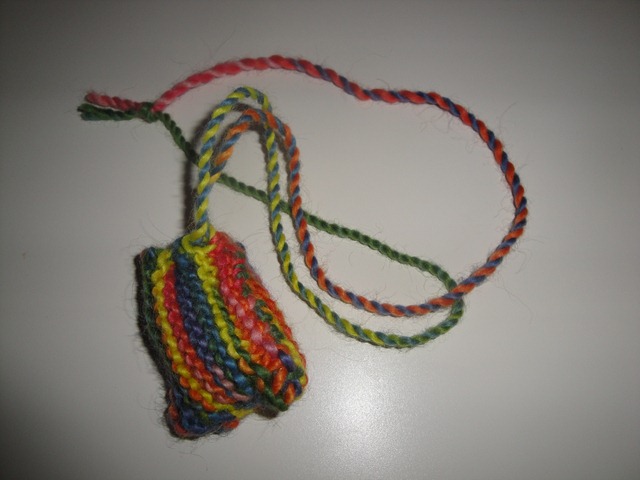
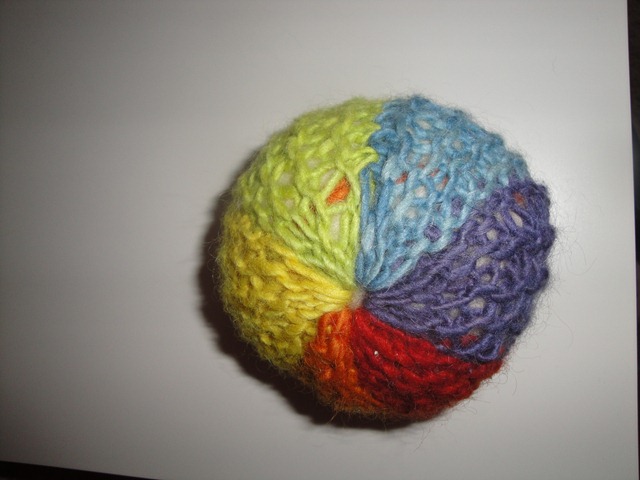
Here are some of the projects my second grader has done this year:

001

Above:  A special pouch necklace to hold treasures!

Below:  A sachet; slip your favorite- smelling tea bag inside!

002

Below:  A rainbow ball

003

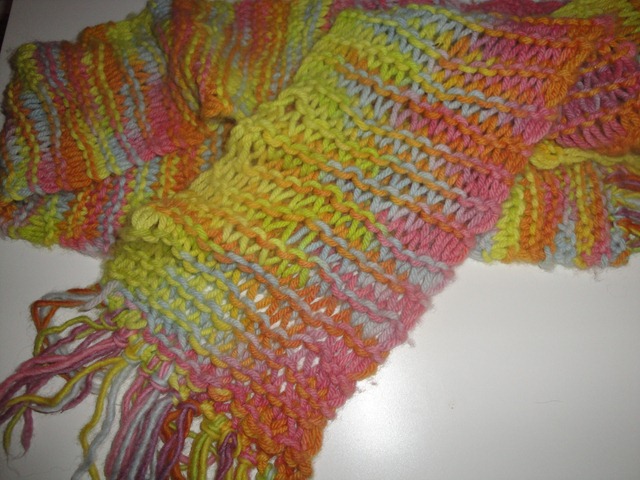
Below:  A child-sized scarf:

006

Below:  A scarf for Beloved Bear!

004

In progress right now is a doll poncho, since the scarf for Beloved Bear is now finished. 

Hope this gives mothers out there some ideas for longer and shorter projects for the second grade year.

Blessings,

Carrie

Waldorf Planning Time!

I think April is a great month to order materials so you have a good amount of time to look through everything and plan.  I usually order my things at the end of March, so my Third Grade things are already here, which is really exciting!

Melisa Nielsen did a great radio show on planning if you would like to listen:

http://www.blogtalkradio.com/alittlegardenflower/2010/04/05/planning-for-the-new-year–part-1

Melisa made a lot of wonderful points and I encourage you to take the time to listen to this!!

I think the one thing to think about beside the obvious “what-do-I-need in terms of supplies and materials for my child”  is “what-do- I need- to- read -to prepare- myself- as- a- teacher.”

A MAJOR piece of planning for me is my own spiritual development to go with each grade.  This year my oldest is a Third Grader and  I am considering Beth Moore’s Bible Studies on both “The Patriarchs” and “Esther.”  I think those will tie in well with Grade Three studies!

You can work with Waldorf Education without even dipping a toe into Steiner’s works.  I think that is just fine! You can absolutely take the the subjects studied within each grade and plan!  For Third Grade, I am dipping into some  of Steiner’s lectures as background to help give me some background, especially for the farming and gardening end of Third Grade.  I am  currently reading “Practical Advice to Teachers” and doing “The Agriculture Course” lectures one by one.  My reading for the summer is going to include “Discussions With Teachers”.  I would also like to read his lectures on “Bees”.  I think all of those would be great preparation for Third Grade from Steiner himself.  There are also those wonderful booklet commentaries that Roy Wilkinson wrote about various aspects of each grade, from Interpreting Fairy Tales to Practical Work for Third Grade…These booklets can run from about $5.95 and up at Rudolf Steiner College Bookstore and Bob and Nancy’s Bookshop.

One practical thing to consider is how many days we will be going out each week.  To me, third grade ramps up a bit, and the need to be home is great.  One just cannot be running around every day, so planning for when to be out, how many activities, is really important.  Where will errands go?  Park dates with friends?  Homeschool group activities?  I try really hard to be home quite a bit because otherwise nothing gets done in homeschooling, and we want the ability to have a relaxed daily pace, not a rushed pace!

What activities will the children do?  Taking a musical instrument comes into play in the Third Grade, in a typical Waldorf school this is usually a stringed instrument.  I have not yet decided what instrument we are going to do, and am meditating and praying about that right now.

The other interesting piece of Third Grade is working in experiences of DOING with farming, gardening, building.  Here in our town there is a wonderful “Bee Camp” for children where they get to work with a hive; there are also many farms around here and farming kinds of activities, so I will be investigating those.

I have written about my approach to planning for Waldorf homeschooling here:  https://theparentingpassageway.com/2010/02/23/planning-101-planning-for-fall/   

Essentially, if you start now and plan a little each week, then you will have it all mapped out by the time school starts in the fall!

Blessings,

Carrie