Simplicity Monday: The Nitty Gritty


I think in  life sometimes we just need to get down to the nitty gritty of parenting and childhood development.  It makes life so much simpler to know the things that are most important to your family, because then you can see what makes sense to do within your days, weeks and months.  Does your use of time match up with what you really think is important?


For example, if simplicity is important to you, but you are running your children somewhere every day, does that reflect your priorities?


If you think religion is important, or spiritual inner development is important to you, but you don’t spend any time in activities that reflect that, then does that reflect your priorities?


Too often we start out the school year very strong, and things sort of peter out by the end of the school year.  What a perfect time of year this is to look and evaluate where your family is, and where you would like to be.


We enjoy having a Family Mission Statement.  This is not everyone’s cup of tea, but it can be helpful in looking at priorities, and making sure everyone is on the same page.  Here is a link to a back post on this:  https://theparentingpassageway.com/2009/05/08/creating-a-family-mission-statement/  Our Family Mission Statement involves kindness, integrity, positive attitude, patience, and adventure.  Yours will be different, but I think it is worthy project to undertake.


I would love to hear what you are revitalizing in your family life this time of year!

Much love,
Carrie

Summer Rhythm


Happy Summer to all!  It is summer here in the United States, although some parts of the U.S. are having colder than usual weather, to be sure!


One thing in summer is to enjoy the expansive space and time of the endless days of heat, warmth and sunlight and a time of rest from academic work and a rhythm better suited to colder days.  However, I also receive many letters from readers asking about a rhythm to the days, about what to do with sibling bickering, should they continue doing circle time with smaller children…what  to do, what to do.


I used to not plan for summer at all and was content to let the endless days of swimming here in the Deep South unfold.  However, the older my children have gotten, and the more children we have had, it was clear some bit of rhythm was being craved by all.  Having a simple framework for when at home in the summer can be a big help towards staving off any summer bickering and a relief to children to know they have long stretches of time to play, but also special things to do, even at home that makes special summer memories.


For my youngest little three year old, I am thinking of having a small circle time of songs and fingerplays and footplays three days a week, along with a story this month.  We have been doing the story of Goldilocks and the Three Bears for almost a month now, which is  still well-loved and enjoyed, so that will be the story I will continue.  My older children enjoy time for crafting, preparing for festivals, painting and baking, and all of us enjoy time to be with friends.  I look at what days we will be home and what days we will be out. I also look at what days we will swim, what days we will be with friends and are there any days of the week in which we may just be home (no swimming and no friends to play with but just a good ole’ family day).  I also use this summer time for things I mentioned a few posts back on a Simplicity Monday – decluttering, planning for fall homeschooling, and regular cleaning and cooking.


We have had an expansive time of summer so far with travel and horse camp, so this coming week will be a week to settle into summer and being home.   A sweet summer circle and story, crafting, Father’s Day preparations, and baking, along with lots of swimming and being with friends, should round out the week nicely.


If you are interested in ideas for summer, here are a few back posts that you may find enjoyable:

https://theparentingpassageway.com/2011/06/09/guest-post-creating-a-magical-summer/

https://theparentingpassageway.com/2011/05/24/summer-stories-and-summer-nature-table/

https://theparentingpassageway.com/2010/07/21/summertime-bickering/

And the famous July Doldrums!  https://theparentingpassageway.com/2009/07/31/down-and-out-the-july-doldrums/  and here:  https://theparentingpassageway.com/2010/07/05/the-july-doldrums-again/


Can’t wait to hear all of your wonderful ideas and plans for summer! 

Love,

Carrie

Fifth Grade Greek Mythology and Ancient History


WP_20130524_008

Greek mythology is a wonderful block.  These stories have lent so many expressions into Western Culture and much like expressions from the Bible, a student will be at a disadvantage to not know these stories, to be familiar with these expressions, and to later understand Greek civilization and how that has impacted our own history in the United States.


You can see the resources we used in my previous post regarding Ancient Mythology and Civilizations.  Our projects this block included a lot of drawing, including a large picture of Artemis as chosen by my daughter as her favorite to draw, modeling of columns and vases in clay (see the Christopherus Fifth Grade syllabus), drawing of columns, freehand map drawing, learning the Greek alphabet and writing a few simple phrases, and memory and recitation of poetry. 


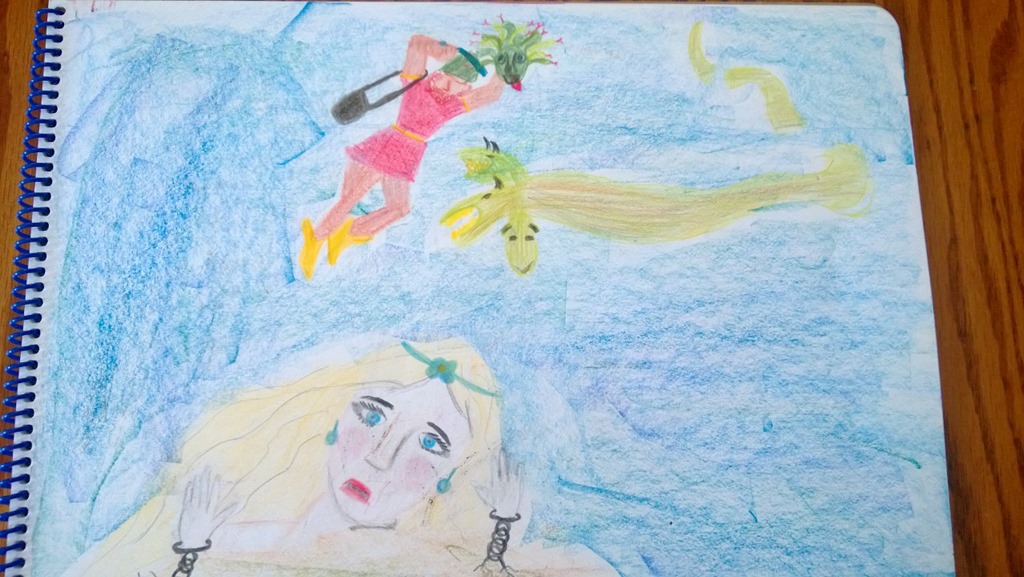
We started in the land of mythology with the book of Greek Myths from D’Aulaires’ Book of Greek Myths and then leading into the wonderful stories of Perseus, Heracles, and Theseus.  Here is a scene my fifth grader drew from the story of Perseus:


WP_20130606_009


I used Dorothy Harrer’s “Chapters In Ancient History” as an aid in contrasting life in Sparta and Athens, talking about the landscape of Greece, the school boy in Athens, and many of the biographical sketches.


We finished with the history of Ancient Greece, and Charles Kovacs’ “Ancient Greece”, did an excellent job in terms of making Greek History and Alexander the Great accessible, understandable and memorable.  I cried at the end of telling the story of the Battle Of Marathon.


One note about Ancient Greek History: many Waldorf homeschoolers put this off until sixth grade. My fifth grader was eleven for the entire school year, and close to turning twelve by the end of the school year, so I chose to go ahead and include it, but if you have a younger fifth grader you might want to place this in sixth grade.


More next time,

Carrie

Guest Post: Hybrid Rasta Mama Weighs In! A Special Offer for Parenting Passageway Readers!

This is a letter from my friend Jennifer over at Hybrid Rasta Mama who has a special offer you won’t want to miss!  Thank you so much Jennifer for this offer, and for all your kind words.


Jennifer writes:

I have been a long time reader of The Parenting Passageway. I can actually remember the day that I stumbled on Carrie’s site.  I felt like I struck gold when I found her Random Thoughts About Newborns post! I was two months away from becoming a first time mother and I drank in every word Carrie wrote from that point on. She presented information that a new mother like me could wrap her brain around without getting completely overwhelmed (more so than I was from simply becoming a mama!)


Carrie is actually the sole reason that I started my blog. She didn’t know that until now but it was with her gentle encouragement that I took the plunge and started chronicling life as a conscious parent and natural health advocate. That was February 2011. Over 500 posts later and I have never looked back! (Carrie here:  I had no idea, and I am touched. Jennifer’s blog is great – head on over and take a look!)


One of the first series that I tackled on my blog was the Mindful Mothering Challenge. It was inspired by Carrie’s original 20 Days Towards More Mindful Mothering series. To this day, it is still extremely popular and I was thrilled to not only share Carrie’s wisdom with my audience but to work through the entire series for all my readers to garner inspiration and motivation from!


Fast forward to today and my series is now a 57 page bonus eBook that is part of the Mindful Parenting eBundle. (Don’t worry – I made sure that Carrie gave her blessing and of course I credit her upside down and sideways!) This eBook takes you, the mother, through 20 small steps which will awaken your mothering, push you beyond your comfort zone, and deepen your connection with your children. What I personally love about this eBook is that it is real talk…I give you me and all my flaws to learn from!


Carrie talks a lot about gentle parenting from an anthroposophic viewpoint on The Parenting Passageway (obviously!) As a former Waldorf preschool aide, this always resonated with me and it is how I approach my parenting. The more I wrote about conscious parenting on my blog, the more I realized that I needed to pull together a pool of gentle parenting resources that would resonate with parents from a wide variety of backgrounds and parenting philosophies.


I teamed up with two other wonderful mamas to bring The Mindful Parenting Bundle to fruition! There are 22 eProducts including eMagazines, eBooks, teleseminars, audio, and workshops. Topics include peaceful guidance, creativity and play, stress relief for parents, mindful motherhood, divorce, coming of age, children and food, and more! Attachment Parenting International even included their teleseminar on the 8 Principals of Attachment Parenting, something I wish I had access to long ago!


If you would like to learn more about the contents of this Bundle, please visit: http://www.hybridrastamama.com/mindful-nurturing-bundle. This bundle is only available until June 10th and is an incredible deal at only $24.95. You get close to $300 worth of products that will truly enhance your parenting no matter what season of motherhood you are currently in! I personally will be able to glean inspiration from many of these resources until my daughter is well into her teen years.


Thank you again to Carrie for being such a huge inspiration to me and for allowing me to share The Mindful Mothering Challenge as part of this bundle. You are a beacon of light for a lot of mothers and I honestly would not be the mother I am today if I had not stumbled on your blog.


Peace and Love,

Jennifer at HybridRastaMama.com

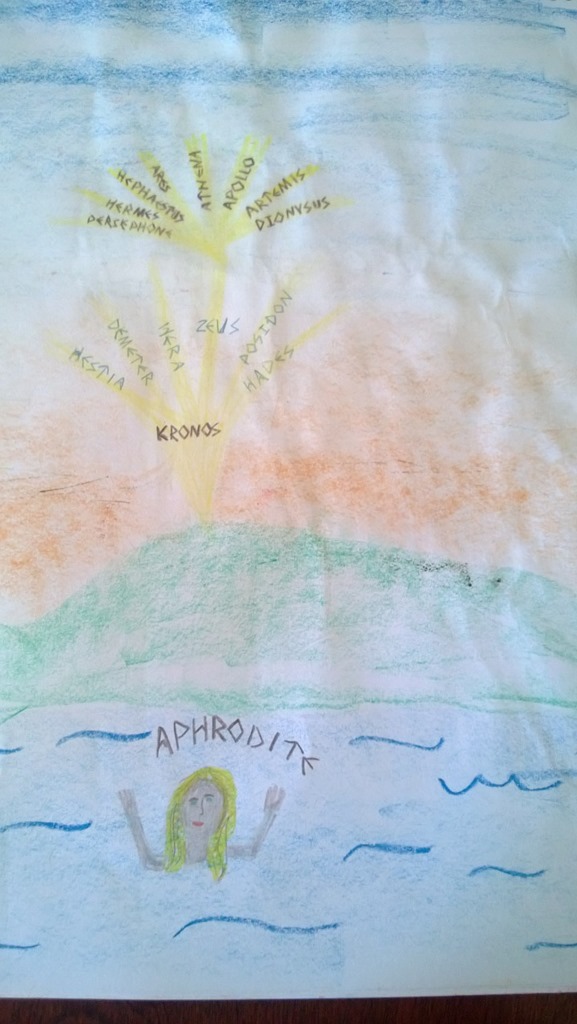
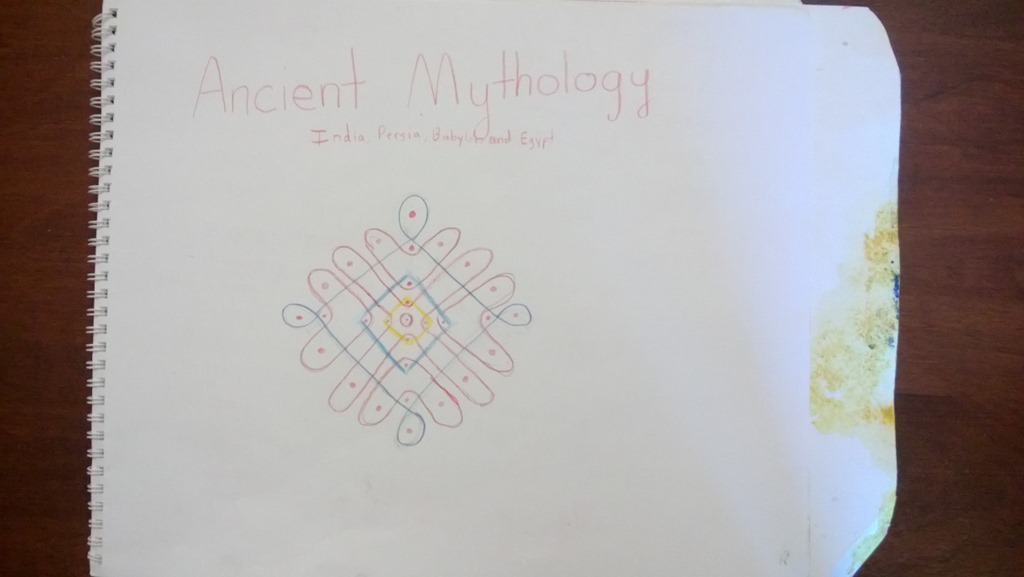
Fifth Grade Ancient Mythologies and Civilizations

WP_20130603_001

These blocks are the hallmark and mainstay of the fifth grade experience for Waldorf students.  They are fun blocks and there are many things you could do with these stories and with Greek history ( if you choose to include Greek history and not push it off until sixth grade).

These blocks go through the mythology of Ancient India, Ancient Persia, Ancient Babylon, Ancient Egypt and Ancient Greece and then possibly move into early Greek history.  The Christopherus curriculum has a wonderful block on Ancient China; Live Education includes this in eighth grade.

The resources we used included: Continue reading

Simplicity Monday

Here in the United States, we are entering the official start of summer with the celebration of Memorial Day.  I find this time of year a great time to take stock of my home.

What needs to be decluttered and gone through over the summer before school starts?

How can I streamline errands?

How can I get costs down on  necessary items, such as food?

One way I declutter is to sit down with a calendar at the beginning of the summer, pencil in days for vacations and day trips we want to take, and then pencil in what areas in my home need attention on certain dates.  I have the garage on my list, plus the school room and other areas.

Recently,  I have been attempting to streamline errands by Continue reading

Sunday Books: “Completing The Circle”

Today is another look at the wonderful book “Completing The Circle” by Thomas Poplawski and available as a free ebook.  Today’s chapter is about “Children and Sports: Finding A Balance”, which is an area in which I have some personal experience with my own children and what we have found to work and not work.

The hurried child syndrome has extended to the world of sports. In a world where children often played pick ups games unsupervised by any adult for long periods of time, the sporting realm has now turned into teams organized and run  by adults, with adult rules of play, uniforms and other realms of organization that used to be relegated until the high school level.  This I can attest from my own personal experience.

Poplawski writes the following, which is also something I have personally seen as a pediatric physical therapist: Continue reading

Links You Have To Read

This is a really important article about suicide and how we all can help in this epidemic:  http://www.thedailybeast.com/newsweek/2013/05/22/why-suicide-has-become-and-epidemic-and-what-we-can-do-to-help.html  .  It really goes well with the book I am currently reading, “The Optimistic Child” by Martin E. Seligman.  I hope we go can through this book on my blog on “Sunday Books” after we finish the book, “Completing the Circle”.

Here is something that has been inspiring me lately:  Continue reading

Protecting Your Children From Low Self-Esteem

I am back after a few days of visiting Tybee Island in Georgia with my family and some members of our homeschool group.  It was a lovely trip, and we got to take classes through the 4-H center there that really highlighted the very unique ecosystems in Georgia’s barrier islands.

One thing I have been reading during the drive to and from our vacation spot was  “The Optimistic Child:  A Proven Program to Safeguard Children Against Depression And Build Lifelong Resilience” by Martin P. Seligman, PhD.  This book is really fascinating, and I was interested in reading it mainly due to this quote:  “  As puberty approaches, your child’s theory of the world crystalizes.  She may now be pessimistic, passive and introverted.  As the routine but painful rejections and failures of puberty start, depression reaches alarming proportions.  Almost one-third of contemporary  thirteen-year-olds have marked depressive symptoms, and by the time they finish high school almost 15 percent have had an episode of major depression.”

Grabs you, doesn’t it?

Anyway, one chapter that was very interesting in this book was the chapter on self-esteem and Dr. Seligman’s theory that “By emphasizing how a child feels, at the expense of what a child does – mastery, persistence, overcoming frustration and boredom – and meeting challenge – parents and teachers are making this generation of children more vulnerable to  depression.”

In Dr. Seligman’s view, people who suffer from depression  have four kinds of challenges including behavioral (passive, indecisive, helpless); emotional (sad); somatic (disruption of sleep and eating) and cognitive (they are not worthy of anything and their life is not worth living).  Only the last part, the cognitive part of depression, can be tied to self esteem because in Dr. Seligman’s view even those who feel badly about themselves does not lead directly to causing failure in life.  However, the belief that problems will last forever and ever causes children to give up trying, which leads to failure, which does lead to self esteem being lowered.

Instead of trying to teach a child how to “feel good” about themselves, or setting up situations in which a child never fails, Dr. Seligman advocates an approach held by many psychologists called “doing well” (in place of “feeling well”).  In this approach, children are  taught to change how they think about failure, to be encouraged to be tolerant of frustration, and to have their persistence rewarded rather than just  their success.

In other words, Dr. Seligman has targeted five areas in which children need our help:

1.  To help our children live for something bigger than themselves.  The more a child believes (or an adult) that “I am all that matters” of course, the more blows will hurt.  Things such as religion, duty to the nation, community, family used to be buffers against depression, in Dr. Seligman’s view and in the view of many in the psychology community,  and now we need to figure out what to do when “self has become all important”.

2.  To not rescue our children from negative feelings.  Dr. Seligman writes, “ But feeling bad has critical uses, and all of them are needed for learning optimism and for escaping helplessness.”

3.  To help our children deal with frustration and challenge.

4.  To help our children learn to deal with overcoming helplessness.  “Any complicated task your child might undertake consists of several steps, each of which is more or less easy to fail at. “  If your child fails at a subset, the child can learn to give up and leave the situation, which becomes learned helplessness.  Or your child can stay in the situation and act and try to change the situation, which eventually becomes mastery.  Children need to fail.  If we protect our children from failure, then we deny them the chance for mastery.

5. To set clear limits and enforce those limits for our children.  “The more freedom the child had, the lower his self-esteem.”

Interesting read, with more to come.

Blessings,

Carrie

The Mood of Celebration–Part Two

I have had numerous requests to share my little monthly lists.  I am happy to share one with you, but I am not sure it will be of service to you other than to provide an example.  This is because these lists are very specific to my Anglican faith, and also to the seasonal changes within the climate and area of the country in which I live, and also to what I have available locally regarding celebration in food, events and  place.

For me, the weaving of the natural and the liturgical year is common to our family. So, to plan, the first thing I literally do is get out My Book of Common Prayer and find out when things such as Lent, Easter and Ascension are, Feast Days of Saints, and things that I just know from tradition within my Parish that happen each year.  I also try to think in terms of attending the Divine Liturgy itself, but  also what speaks to that particular season through nature because that is where  I can more show my children in our home what ties this whole season back to the Holy Trinity.

For example, the days between Easter and Pentecost, (when we celebrate when the church was born), is a time I like to think about family.  We are part of the family of humanity, we are part of the family of the Church, if we make a birthday cake for the church on Pentecost, what could we be doing to talk about the Church and family and us as the broader picture of Anglicans around the globe to lead up to this?  (Please remember that I have older children as well, so things are more direct for them than just the indirectness that goes on for a tiny child under the age of nine!)   The idea of family, of living in communion,  is a huge concept, but there are indirect ways to do this.  Or, for another example,  how about the days after Pentecost as a time of growth?  There are many sweet picture books about nature and growth to have in a book basket, many ways to experience a beautiful garden and how we grow as Christians.  These are just a few examples.

The second thing I do is just start making free form lists with what I associate with each month – bonfire?  certain foods?  certain events in our community? certain craft  or handwork projects?  certain songs?  I get out my memories, my notes from previous years, my Early Years books and make lists.

Then I can take these ideas and plug them into a monthly rhythm and a weekly rhythm.

So, here is an example for you, but you really need to sit down and do this for yourself.  I don’t mean this harshly, but if creating a family culture is important to you, if Waldorf homeschooling is important to you, then you will try to do your own lists after you see this example.  You must be a person of initiative in order to have this be true to your own family.

So, here is my list, for example, for September: Continue reading