Waldorf Homeschooling Third Grade: Second Old Testament Block

You can see this post regarding the first block of Old Testament we did here: https://theparentingpassageway.com/2010/10/30/waldorf-homeschooling-third-grade-first-old-testament-block/

The  main resources I used for this second  block included (other than several Bibles of different versions):

  • The Christopherus Old Testament Manual and Stories – the background information in there, the ideas for puppetry, modeling, and wet on wet painting were really very helpful.  
  • Ruth Beechick’s “Genesis:  Finding Our Roots” and “Adam and His Kin” were helpful during the first block, but they chronologically ended where our first block ended.
  • Jakob Streit’s  “And Then There Was Light” was used in the first block and now in this second block we have moved into “Journey To The Promised Land” by the same author.   Some may find this esoteric companion to be quite startling, but I liked much of it because it incorporated what is said in the Bible and what was said in Hebrew legends surrounding these events and fleshed the Biblical events out in a story format.  
  • Arthur Auer’s “Modeling:  Sculptural Ideas for For School and Home” had excellent suggestions for modeling the Tower of Babel.
  • Dorothy Harrer’s “An English Manual”
  • Roy Wilkinson’s “Commentary on Old Testament Stories.”
  • For this second block, I found Geraldine McCaughrean’s “God’s People:  Stories From The Old Testament” helpful for some of the drawings that I could easily translate to more archetypal figures and such.

This second block of Old Testament Stories we did included the stories of The Tower of Babel, Abraham,  the story of Isaac’s servant at the well meeting Rebekah, Esau and Jacob, the story of Joseph, Moses in the Bulrushes, Moses and the burning bush, The Exodus, and  The Ten Commandments.

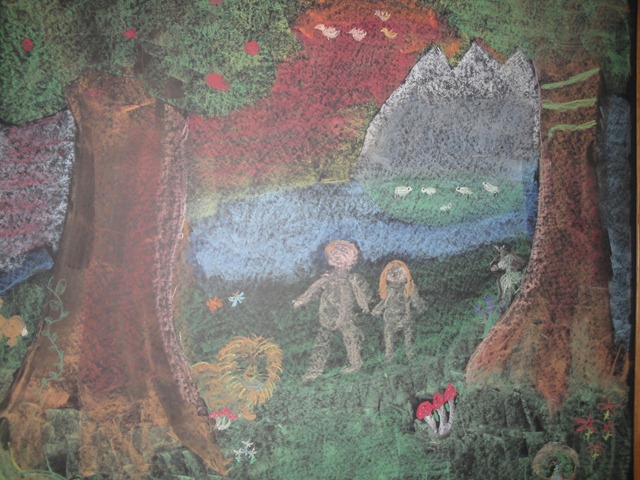
We did several modeling projects, wet on wet paintings and crafts.  These stories are very deep and really penetrate into the nine-year-old child.  I came out one morning long after this block had ended and my daughter was actually drawing on one of the chalkboards a picture of The Garden of Eden with Adam and Eve.  She didn’t say anything about it; she didn’t have to as these stories so deeply affect a child of the nine-year change.

Many blessings,

Carrie

Third Grade and The Nine Year Change

Well, this year in Third Grade has been an interesting ride.  I have some advice for all of you coming up to Third Grade, but please keep in mind I am only basing this on my personal experience and your child may not experience any of this at all.

Nine is the age of DOING.  I read that over and over and over places, did my best to put it into practice with practical life skills, music and singing, crafts, handwork, doing math with games and hands-on application in addition to more regular work.

And it was interesting, because it seemed as if nine has been one large outbreath.  It was an age of writing and drawing skills regressing for my child, to the point where she looked at her Second Grade Main Lesson books and said, “I did a much better job last year.”

It was the year of “Mommy, I am trying to be careful and not rush……but I just want to be done.”

It was the year of frustrations and tears in the late fall especially, and now things seem to have evened out.

So, here are my suggestions:

Here are some posts about homeschooling Third Grade: 

https://theparentingpassageway.com/2010/05/04/waldorf-third-grade-student-reading-list/

        and here: 

https://theparentingpassageway.com/2010/07/26/a-brief-note-about-waldorf-third-grade/

         and here:

https://theparentingpassageway.com/2010/08/11/layout-of-blocks-for-waldorf-grade-three/

         and here: 

https://theparentingpassageway.com/2010/10/27/waldorf-third-grade-handwork-projects-for-fall/

         and here: 

https://theparentingpassageway.com/2010/10/30/waldorf-homeschooling-third-grade-first-old-testament-block/

    Many blessings to all,
    Carrie

Waldorf Homeschooling Third Grade- First Old Testament Block

(Note – this is long so feel free to go and get a cup of tea!) 🙂

We started our school year with Form Drawing and then moved into our first Old Testament Block.

The Old Testament Block is one that many folks struggle with due to their own experiences with religion.  Please remember, these are stories of a people and that people’s relationship to authority; they are also the stories of a people trying to make a home for themselves on earth.  These issues speak  clearly to a nine-year old who is grappling with these ideas if only subconsciously.  These stories are not dealt with from a religious perspective within the Waldorf curriculum, although of course one is free to do this at home if one is Christian or Jewish.  I am Christian and tend to look at these stories from that viewpoint.    I highly suggest you obtain a copy of  the Christopherus Homeschool Resources’ Old Testament Manual and Stories:  http://www.christopherushomeschool.org/bookstore-for-waldorf-homeschooling/publications-for-grades-1-through-5/old-testament-stories-3rd-grade-curriculum.html  I think that the Christopherus notes to approaching these stories is helpful.  The other source that helped me approach this block was the Christian resource “Genesis:  Finding Our Roots” by Ruth Beechick.

We looked at what was present before Creation occurred and  how the singing of the stars accompanied Creation (another quote for the Main Lesson book – see Job 38:7). We also looked at the beginning of the Book of John, of which many of you are familiar, that talks about what was present from the beginning of time.   We started with these quotes in print and moved into cursive writing later in this block.

So then we were ready to start talking about the first story in the book of Genesis, the story of Creation.  We wet –on- wet watercolor painted the 7 Days of Creation.  My main resource for the painting inspiration came from the Christopherus Third Grade Curriculum.  We looked at God creating man in His own image,  I had my Third Grader write in her Main Lesson Book “God created human beings in His image” (Genesis 1:27).  I pulled spelling words from the story of Creation.

We then moved into the story of Adam and Eve, The Garden Of Eden and the Fall.  I used the animals and plants inhabiting the Garden of Eden as a way to start forming sentences with a subject and a predicate (subjects in blue and predicates in red).  I have mentioned before that we have done a little more grammar than is typical of this point in the Waldorf curriculum due to the fact that my Third Grader is also in German School  on Saturdays and was getting the grammar between German and English rather mixed-up. 

DSC00677

The story of  The Fall and of Cain and Abel can be very challenging ones!  We found  the language to use for the summary of Cain and Abel to be challenging and we consulted several different renditions of this story – the Bible, Ruth Beechick’s “Adam and His Kin”  and Jakcob Streit’s “And Then There Was Light”.

My daughter’s narration of The Fall ended up being this:  “Adam and Eve ate from the Tree of Knowledge.  They were driven out of the Garden of Eden.  On earth they had to make clothes, build a shelter and gather food.”   It is very important to really go through this process on the board and not rush trying to obtain a summary.

We then looked at the story of  Cain and Abel.  My daughter’s narration about this was:  “Adam and Eve had two sons.  Their names were Cain and Abel.  Cain was a farmer and Abel was a shepherd. Cain thought God refused his sacrifice but accepted Abel’s.  Cain became angry and struck his brother dead.  The Lord punished Cain and Cain became a wanderer on earth.” 

After this we traced the descendents of Cain and Seth and my daughter drew these family trees in her Main Lesson book.   This idea came to me through Christian author and homeschooling consultant Ruth Beechick’s book “”Adam and His Kin”.   This lineage will become important later as we trace the lineage leading to Abraham (and in our faith, leading to Jesus) in our second Old Testament block.  We talked about the sons of Lamech (a descendent of Cain):  Jabal, Jubal and Tubal Cain and their contributions to civilization.   For these stories I used a combination of what is in the Bible and what Ruth Beechick fleshed out of the sparse  lines in the Book of Genesis in story form in “Adam and His Kin”.  I also found the section of these stories in his book mentioned above to be helpful.

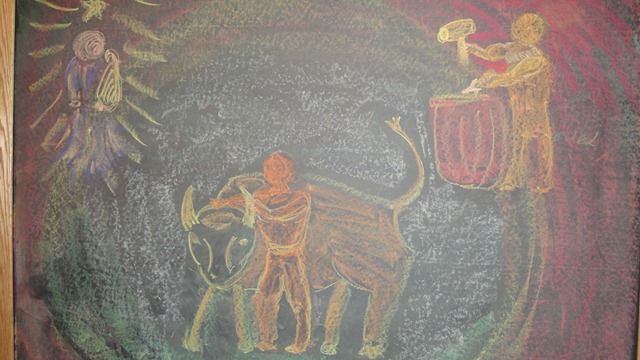
Here is a chalkboard drawing of Jabal, Jubal and Tubal Cain.  Go peek at the Book of Genesis and see if you can match my drawing up with who is who! 🙂

DSC00685

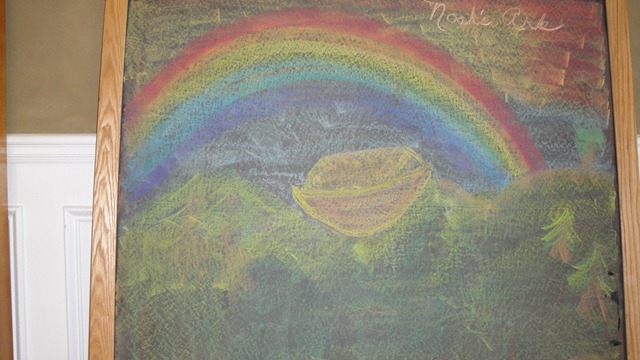
After that we moved into the story of Noah and the Ark:

DSC00703

We used the animals of the Ark as a springboard to talk about naming words, doing words, how words and picture words and made many sentences with pictures.  We ended this block with the story of what happened to Noah after the ark came to rest and how Noah’s descendents populated the earth.  We will pick up  our next block with the story of The Tower of Babel.

For this block I would highly recommend the following resources:

  • The Christopherus Old Testament Manual and Stories – the background information in there, the full-color reproductions of the seven days of creation and other ideas for working with this block are helpful.  Also, the music section of the complete Christopherus Third Grade syllabus had helpful music and poetry suggestions to go along with this block, including an intriguing poem about Tubal Cain.
  • Ruth Beechick’s “Genesis:  Finding Our Roots” and “Adam and His Kin”
  • Jakob Streit’s  “And Then There Was Light.”    Some may find this esoteric companion to be quite startling, but I found much of it matched up to Ruth Beechick’s book quite well because both incorporate what is said in the Bible and what was said in Hebrew legends surrounding these events and fleshes the Biblical events out in a story format.
  • Arthur Auer’s “Modeling:  Sculptural Ideas for For School and Home” had excellent suggestions for modeling for Noah’s Ark, and the animals of the Ark and the Garden of Eden.
  • Dorothy Harrer’s “An English Manual”
  • Roy Wilkinson’s “Commentary on Old Testament Stories.”
  • One resource I do not have but would really like to get for when I do this block again is this one: http://www.amazon.com/Legends-Bible-Louis-Ginzberg/dp/0827604041/ref=sr_1_1?ie=UTF8&qid=1288451554&sr=8-1    I believe Eva over at Untrodden Paths mentioned this on her blog and it was the first place I had heard about it.  Thank you Eva.

The challenging areas about this block outside of  the themes and stories themselves included the drawing – moving into drawing animals and the importance of gesture and color in these drawings; what spelling words to really pull from these stories (too hard? too easy?); and being able to really pull in the music, painting, modeling, poetry in conjunction with all the grammar and spelling and introductory cursive writing.  Again, I enjoyed working grammar in with these stories for my child  but not every child will be ready for that. 

The other interesting aspect of this block for me personally was seeing my nine-year-old’s work. It was, to be frank, rushed and sloppy.  Some of this was no doubt due to me having  to stand up and hold and dance around with a baby and tend to a kindergartner and not being able to always sit right there and draw each step by step, but some of this was also due to where my nine-year-old was.  She did not want to rush, she told me, but she wanted to “get through the stories and drawings.” (She told me this after the block was over, and you can see the logic of a nine-year old right there, bless her heart).   I felt we did a lot of “active” in this block, singing and stamping and poetry and modeling and painting and drawing, so I do think some of that is just indicative of where she is developmentally right now.   This is the blessing of being able to work with our children at home and meet them where they are.

Hope that this post will be helpful to some of you as you plan.

Many blessings,

Carrie

How Old Should My Child Be For Dry Needle Felting?

My wonderful handwork teacher Judy Forster noted to me the other day that the control and sharpness of the needle for dry needle felting are challenges that are just right for the physical and emotional changes that occur in middle school (typically 7th and 8th grade). 

From my observations of the development of the child at different ages, I agree with her. I also think there are many, many projects one can be busy with, so why be in such a rush to get to that rather hardening gesture?  This is an important point for Waldorf homeschooling parents who may be guiding their children’s handwork program without having a Waldorf-trained handwork teacher to assist them!

Wet felting is a wonderful alternative, and children in the grades can knit, crochet, macrame, cross stitch (fourth grade, age 10), sew (typically grades six and seven for projects) and do many other types of work with their hands.

If you have small children under the age of 7, I like to think about color and freedom.  The small child should be able to choose colors and materials and turn them into whatever suits the child’s fancy of the moment, whether that be a ghost or an elephant.  They may imitate you, but often they are just a wellspring of creativity.    I remember I had one good friend whose little boy made a whole bunch of creatures and critters from sheets of felt when he was around four or five.  The colors and shapes and what they were called were all his and he loved them.

Even in older children, seeing what colors the children pick and what they want to make is fascinating.   My Third Grader is currently drawn to blues and greens and I feel this is meeting her temperamental traits and where she is.  Color and form is fascinating!

If you need help determining what project comes when within the Waldorf curriculum,, please look at this back post that Ms. Judy Forster was so kind to write for this blog:  https://theparentingpassageway.com/2010/03/28/handwork/

Many blessings to you all,

Carrie

Waldorf Third Grade Handwork Projects For Fall

So far my third grader is learning to crochet.  Here are examples of beginning crochet work that she has done so far:

A belt with wooden beads:

\DSC00687

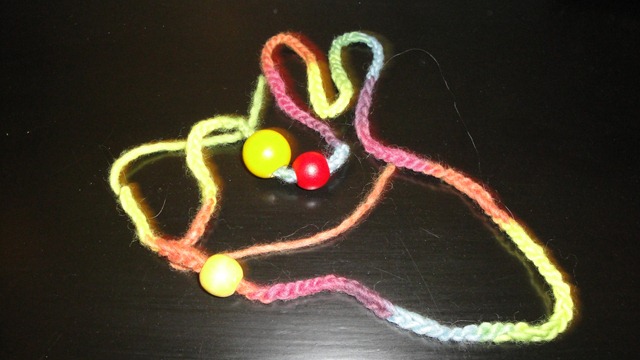
A crocheted “Thread of Life” (my term)  for our All Souls’ Day (November 2nd)  table:

DSC00791

And another view, with some orange paper flowers the children made for this festival:

DSC00790

Note there are no examples of knitting projects yet as our year just began in September.   Third Grade is also the correct time to teach the purl stitch as the nine-year change marks the appropriate time to move out into the space beyond and behind oneself.  This experience of  self- awareness and what may lie away from oneself belongs to the nine-year old who is beginning to separate. 

If you need a recap as to what types of handwork comes where within the framework of Waldorf Education and why, here is a wonderful article by my Waldorf homeschooling group’s handwork teacher Ms. Forster:  https://theparentingpassageway.com/2010/03/28/handwork/

Many blessings,

Carrie

Ideas For Field Trips For Waldorf Third Grade

I have been tossing around some ideas for field trips for Waldorf Third Grade.  Perhaps my list will spark some of your own ideas for your family!

  • Obviously, working on farms if that is possible is a biggie.  The point with farming is not so much to visit farms but to WORK on them, to have that experience of building the will when you must do something and see it to the end.  So, that is not so much a field trip but an experience to plan…
  • But, for field trips involving farming, I have also been thinking of orchards, cow dairy farms and goat diary farms, beekeeping operations
  • State Agricultural fairs
  • Native American pow-wows or visits to Native American reservations
  • Perhaps a visit to one of those museums where the people dress up and re-enact how things were done in pioneer days
  • Visits to a working quarry, building sites
  • Visit to see wildlife rehabilitator who deals with injured owls, birds or a visit to a falconer  (it seems as if someone I know was telling me they had a family member who was a falconer, if only I could remember who that was!)
  • Thrift shop/fabric store during textile block
  • Sheep shearing to washing to dyeing to making yarn


What experiences or trips are you planning for Third Grade?

Many blessings,

Carrie

Layout of Blocks For Waldorf Grade Three

Well, I am almost done planning for my Third Grader. This is the order of blocks I chose with some brief notes and resources.  I am not saying this is how YOU should do it, LOL.  The joy of homeschooling is to be able to pick what resonates with your family, your child and choose what works best for you.  However, perhaps seeing this layout will spark some ideas for your own family from this list!

Also, please note, my daughter is fully nine for this entire school year, so if you are doing Third Grade with an eight-year-old who turns nine during the  school year, you may consider placing the Old Testament Stories later in the year.  I think children should be fully nine  and in the throes of that nine year change in order to hear these tales and really have them resonate with them on a soul level.

If you would like to read what my overarching theme for this year is, please see this short post here and then come back:  https://theparentingpassageway.com/2010/07/26/a-brief-note-about-waldorf-third-grade/

The idea for Lessons A, B and C did come from Donna Simmons’ Christopherus Homeschool Resources Third Grade Syllabus (see here:  http://www.christopherushomeschool.org/bookstore-for-waldorf-homeschooling/curriculum/3rd-grade.html) and I am incorporating it into our rhythm this year.  I am hopeful it will work out well!

So here is the layout I am in the midst of crafting, completely subject to change as I see fit:

3 weeks Old Testament Stories (A:  Form Drawing; B Math  C (after lunch): Painting alternated with  Modeling 1 week, String Games 1 week and Cooking 1 Week)

1 week  Farming (types of soils, worms, the “perfect farm”)  (A: Handwriting  with Poetry B:  Music C:  Games)

3 weeks Math from Noah’s Ark (A:  Grammar; B Music;  C  Cooking or Crafts/Festival Preparation)

4 weeks Farming (including Farm Animals  with poetry and grammar, some of Farmer Boy, types of wood, weather) (A:  Math with focus on Time ;  B:  Music;  C: Hand-sewing)

3 weeks Old Testament Math  (A:  Grammar; B – Birds, Bats with poetry (goes with farming, in my opinion and Old Testament); C- Hand-sewing and Crafts for Holidays

3 weeks Textiles (A:  Form Drawing B;  Cooking; C: Crafts)

Break for Christmas, The Twelve Holy Nights and Epiphany

1 week textiles to finish up (Lessons A; Form Drawing B cooking; C Crafts)

3 weeks Old Testament (A:  Math B: Music or Grammar C:  Painting alternated with modeling or drama or crafts)

3 weeks Math (A: Form Drawing; B:  Grammar or possibly occupations of different people/social studies; C- Crafts or Free Play)

4 weeks Native Americans (A:  Handwriting  or  Math ; B:  Movement or Music C: Crafts)

2 weeks Building (Building Projects)

Break for Holy Week and Easter

1 Week Bees (using Jakob Streit’s book) (A:  Math B:  Music C: Gardening)

3 Weeks Insects. with lots of poetry (A:  Form Drawing B:  Math or Music C: Gardening)

3 Weeks Old Testament ending with David/Testing during this time; we will actually review a bit of this ending time in the beginning of  Fourth Grade starting with the death of Moses..I really just wanted to highlight some of the faithfulness of God in some of these stories and end with some of the Psalms attributed to  King David’s  that suggests fulfillment of our lives through community and connection with God.  My child will be close to ten by the time we do this and I think this idea of our life being spiritually fulfilling and in close intimacy with God will really speak to this particular child; when we backtrack a bit in the fall with Fourth Grade with some of these stories we will look more at the moral ambiguity and human failings part of these stories in preparation for Fifth Grade.  This will not be highlighted when I cover these stories in Third Grade.  Probably clear as mud to those outside of my mind’s ramblings… Donna Simmons talks about the reasoning behind saving some of the tales for Fourth Grade here:  http://christopherushomeschool.typepad.com/blog/2009/06/ot-stories-again.html   Although I stopped in a slightly different place than her syllabus, I will be backtracking those last stories with the Fourth Grade Syllabus and looking at those stories in a different way.

My other note about this layout:  I really wanted to get in Farm Animals, Birds, Bees and other insects in Third Grade  so I can clear up room in Fourth Grade to do a block on Ocean Animals.  As I mentioned above, I will also have some more Old Testament to finish up in Fourth Grade. 

Hope that helps some of you in your planning.

Many blessings and peace,

Carrie

A Brief Note About Waldorf Third Grade

This evening, I was thinking and meditating and contemplating what blocks I am going to choose and/or design  to finish our Third Grade year (I am now up to mid-March in planning).  And this came to me:

The Third Grade year really is about how we, as an individual, find a home here on Earth from the spiritual realm.  We can show this through the study of one group of people, the Ancient Hebrew people, in their stories as recorded in the Old Testament.  The other possibilities are showing how the Native American people how they made their homes here as influenced by the land they lived on (and remember, I have said I am still not sure how I feel about Native Americans within the Third Grade curriculum).  The third possibility for Americans to consider is  the pioneer and how the pioneers made this individualized journey searching for a promised land  as well,  and how the pioneers also worked with the land and the weather to move from being a pioneer to being a settler.  This is something a nine-year-old is  facing as they become more of  an individual and more separate but still part of a family, and part of a larger  community as they grow and mature.

I think the Third Grade year is also about what we need  in order to live.  First of all, one could consider  a relationship with God and to  authority in order to live in community and as a spiritual being.  This is shown in the Old Testament blocks.  Marsha Johnson also has a free Third Grade block over in her files regarding Community.  The next thing we need outside of a relationship with our Creator and a community is the basics of survival :  a physical house (shown in the building block, but could also be highlighted in a Native American block in how the weather and climate and land shaped the housing styles); clothes to protect us from the elements (textile block); and food (farming block).

The Third Grade year is also about doing, doing, doing – how can one take these blocks and make them full of movement, full of the wonder of doing, and how can one tie this into a unified year.  That is the challenge.

Just musing out loud. 

Many blessings,

Carrie

Waldorf Homeschooling With a Kindergartner, Third Grader and A Baby

Yes, this is where I am these days.  Planning away, dreaming and thinking.  And de-cluttering my house.

I saw a post recently on Marsha Johnson’s list regarding doing Waldorf homeschooling with a First and Third Grader;I think one of  the responses was something along the lines of try doing the Main Lesson for the First Grader first thing and make the traditional Middle Lesson for the Third Grader.  I thought that was interesting.

I am trying this rhythm ( below)  this year for my Third Grader and Kindergartner.  Essentially I used my Word program to make a table with two columns with the older children’s names in it because even if one child is working with me on something there has to be something going on for the other child.  Does that make sense?  I cannot leave my Kindergartner to wander about and have nothing planned whilst I am working with my older child, and vice versa.  Or if they are playing or doing something on their own, when that runs out and they need something to do, I have to have something ready to go!

So, the general flow of the day and my chart looks a bit like this:

  Third Grader Kindergartner
Main Lesson

(one to one and a half hours)

Days One through Four here

Movement last 10 minutes or so

Activities to do during Main Lesson, Days One through Four

Movement with Third Grader last ten minutes or so

Kindergarten Story

(15 minutes or so)

What will Third Grader be doing during this time? Listening to the Kindergartner story or working independently? Days 1-3, story, puppet shows Day 3 of last week of story

Day 4  Wet on Wet painting and Bible story

Lesson A (half hour) 10 minutes Movement

plus whatever I put here – math or grammar practice, form drawing, music etc.

10 Minutes Movement with Third Grader

Ideas for Creative Play here

Practical Work (half hour) We can do this together, but I am also thinking:  What can my child do around the house to help today that would be specific to a nine-year-old? DAY ONE-Craft DAY TWO Gardening; DAY THREE Housecleaning; Day four baking
Lesson B

(half hour or so)

Days 1-2

Day four out of house

Days 1-2 Art

Day three Music

Day four out of house

Lesson C (this would be after lunch)

(forty five minutes)

Hands – cooking, painting, modeling, handwork, etc.

Some of this will be done together; Crafts and festival preparation we will do together

Six Year Old Projects
Directed Movement

anywhere from 15 minutes to an afternoon adventure)


The length of time is approximate, there will be rest breaks and snacks and lunch and quiet time in there….I am not saying this is how YOU should do things, this is just what I am experimenting with.  LOL.  If you are wondering where the whole lessons A, B, C, originated from,   I actually liked the lessons A,B,C that Christopherus Third Grade  had, and I only have two children to work  with, so I thought I would give it a go.  As usual, I am taking some things from some pre-created curriculum and creating some blocks myself and melding it all as I see fit.

This is the big idea though:  the more children you have, the more you will have to integrate lessons and not have things be so separate. There are some of you who read this blog who have five or more children,and I am sure you can attest to this! Your Waldorf homeschool will not look like a Waldorf School with everyone having a separate Main Lesson, and that is okay!  Home has so many advantages, and family is first and foremost. 

I am also making lots of plans revolving around the liturgical year; these traditions are precious and dear and another excellent reason we homeschool, so sometimes things will be pared down to a Main Lesson and maybe one other thing involving crafts or  cooking or putting on a play for that particular festival. 

I hope this stimulates some ideas for you all, I hope some of you will share on your own blogs what your planning looks like to help other mothers.  We are all here to help each other and learn.

Many blessings,

Carrie

Musings for Waldorf Third Grade/Fourth Grade

So, I am planning for homeschooling Waldorf Third Grade right now………

and I am glad I have started early.  There is a lot to figure out!

Many people talk about how Third Grade is the year of “doing” and how things in Fourth Grade really shift.  I actually see a bigger  shift occurring  in Fifth Grade, with the start of ancient history and such, with first through fourth leading up to this point in tracing human consciousness and evolution.  So,   I actually am planning Third and Fourth Grades together so they flow nicely.

This came about because I feel one has some decisions to make regarding Third and Fourth Grade:

1.  Do you want Third Grade to be the year of the Old Testament stories (Eugene Schwartz, Eric Fairman) or include Native American stories as well  (Melisa Nielsen, Donna Simmons)?

2.  Where will you put Native Americans? In with the Third Grade building block?  In with gardening in the Third Grade?  In with local geography in the Fourth Grade?

3.  Do you want to split the Old Testament Stories up between Third and Fourth Grade?  Donna Simmons makes an argument for that here:  http://christopherushomeschool.typepad.com/blog/2009/06/ot-stories-again.html

4.  What about those Norse myths – do want a shorter block of those, several blocks throughout the year, do you want to do any part of The Kalevala?  The Norse myths are dark, good for a TEN-year-old, do you want to put them toward the end  of Fourth Grade depending upon your child’s birthday?

5.  In Fourth Grade, do you want to bring in US Geography along with local geography?  I have heard good things about the way Melisa Nielsen approaches local geography in her Fourth Grade curriculum guide, and I like how Donna Simmons lays out her approach to geography through the grades here:  http://www.christopherushomeschool.org/waldorf-homeschool-publishing-and-consulting/curriculum/subjects/geography.html

According to “The Waldorf Curriculum Chart”  I have hanging on my wall, the following areas are typically covered in Third Grade:

  • History- Biblical stories as part of Ancient history and American Indian tales and fables.   History in the Fourth Grade includes  local history, why the early settlers chose your geographic location to live, how they developed the natural resources
  • You can see more about literature and skill development throughout the grades here:  https://theparentingpassageway.com/2010/03/10/history-and-literature-waldorf-homeschooling-grades-one-through-twelve/
  • Math – times tables, prime numbers, carrying and borrowing, problems in time and more goals are listed in other Waldorf math resource books (remember this is just a little chart with boxes!)
  • Housebuilding, farming, clothing are mentioned along with studies of the cycles of the year, soils, farm life, grains, vegetables and fruits, practical work in a garden, introducing colored pencils for writing (my daughter’s handwriting is exceptionally good so we probably are going to go with a fountain pen at this point), crochet work, forest walks and stories about trees and forests as an introduction to woodworking, beginning an instrument, lots of games and more!

Lots to think about!  Start now!

Blessings,

Carrie