Gratitude On Thanksgiving

Hello all my dear readers!  In the United States today we are celebrating Thanksgiving.  This came across Marsha Johnson’s Waldorf Home Educators Yahoo!Group and I thought is was a nice thought for today. 

She wrote:

Dear Friends!

Warm thoughts are flowing towards all of you, each and every precious one, who has chosen to come and be present in this group, on the earth, in your communities, in your families, in your own very self! This is the American Thanksgiving Holiday, a unique festival of gratitude for what has been given and what has been provided, roots deep in a religious tradition, yes, but one that has become a national holiday of harvest to a great degree, with the largest focus on family, food, and the gathering….in groups, as friends, as families, as communities, as humans.

The children are quite excited by all the to-do, with much cooking happening with traditional foods of roasted turkeys (a large fowl), harvest foods such as mashed potatoes & gravy, stuffing (a bready dressing with vegetables, fruits, more), a dish made with sweet potatoes, often, salads, baked desserts such as pumpkin pies served with whipped cream, often many other side dishes, appetizers, drinks, and so on.

It is a time that celebrates an event in our American history when the first immigrants came to the eastern shores and were essentially starving and the native people came with food to share. These foreigners were ill equipped to survive in the new country, nearly starving to death while surrounded by food sources well known to the native peoples, large beds of seafood practically swimming into your hands, native foods unknown to the Europeans such as corn, squash, and so on….

It is a celebration that has some rather bleak images for the native peoples here who subsequently lost their entire ‘country’ and most of their population due to strange imported diseases for which they had no resistance whatsoever….it was this generous provision of food which in some ways contributed directly to their own demise.

Can we be grateful in the moment, unaware of what is to come? Can we teach our children to experience and express thankfulness as a virtue? In today’s competitive world, is promoting this virtue a viable choice or is it perceived as some kind of weakness?

In the Waldorf Way, we are filled at every conscious moment with the love of the ‘other’, the ‘other’ who has come to be near us, with us, around us, befriend us, play with us, spend time with us…..we are so aware of the gift of the ‘other’, the children and their parents, who come willingly and whole hearted, to spend precious time in the school and in the classes, in conferences, and meetings….it is a gift to be together and I am acutely aware of each passing moment, now lost in time, that has been spent with me…

Teaching thankfulness is the job of the adult in all communities, taking time to pause and be very public about the grace that has fallen down upon us in each moment, we can express this for the child and of course, the feelings are present in the youngest child and we can provide a model for imitation, in our vocal quality, in our facial expressions, in our everyday ordinary moments…not just once a year.

Here is a list of potential words to begin to include in your speaking and in your conscious thinking, listen and see if your child(ren) will imitate you and use these, frequently…
Thank you.
Thank you so much.
Thank you so very much.
I am so thankful.
I am so thankful that you thought of me (us).
I am grateful.
I am so very grateful for your help (thought, intention, action).
I feel so grateful for you.
How thoughtful!
How kind!
How sweet of you to remember me!
I appreciate that.
I appreciate you.
I appreciate what you have done.
I appreciate your help.
I appreciate your concern.
I appreciate your attitude (help, presence, questions, assistance).
Don’t we appreciate what you have done!
I am so pleased with you.
I am so happy with what you have done today.
I give thanks to you.
I give thanks to God for you.
I am so happy that you are here with me.
Isn’t it wonderful that “name” has helped us!

Those kinds of remarks can make a deep impression on the child and support the growth of gratitude as a virtue in a time when civility as a custom has been a bit replaced by sarcasm and cynicism

.

Grateful for your friendship,
Mrs. M

Here is toward fostering gratitude in our children, in our homes, and appreciating every day what is right in front  of us as opposed to waiting for the “If Onlys” of the future – “if only” I live somewhere else, “if only” our family had more income, “if only” this or “if only” that.  Gratitude can start in the here and now.

Gratitude for today, gratitude for you!

Many blessings,

Carrie
Ideas for The First Week of Advent In The Waldorf Home

Next Sunday begins the Season of Advent.  I love this long season of Light that culminates in the Twelve Holy Nights and Epiphany.  My family is currently  settling into a new church, and it is exciting that there are many preparations underway for the Season of Advent, culminating in a large Epiphany pageant for the children.  This emphasis upon the liturgical year and the resources that this large parish has to organize, plan and lead these festivities has me as excited and giddy as any small child!

Steiner  himself acknowledged the different festivals revolving around light for the darkness of the year, but also wrote how different Christmas is from other winter festivals in that:

“The birth of the light will be followed by life in the light. Christians, therefore, should not see in the Christmas festival something that passes. It is not a memorial festival commemorating what has occurred in the past. The Christmas message does not say, “Christ has been born, Christ was born.” It says, “Today Christ is born.” Today is always emphasized. This is significant. The emphasis on today should be understood in the sense in which Christ has spoken, “I am with you always even unto the end of days.” This confronts us anew each year and reveals to us the connection between man and the heavens.” (From Signs and Symbols of the Christian Festival, Lecture One, available here:  http://wn.rsarchive.org/Lectures/SignSymbols/19041219p01.html)

Advent in the Waldorf Home is something that is frequently celebrated by people of every religious background, every faith, every spiritual path as part of the festivals of the cycle of the year.  This quote is attributed to Rudolf Steiner, although I don’t think anyone has been able to show exactly where Steiner said this:

The first light of Advent is the light of stone–.
Light that lives in crystals, seashells, and bones.
The second light of Advent is the light of plants–
Plants that reach up to the sun and in the breezes dance.
The third light of Advent is the light of beasts–
All await the birth, from the greatest and in least.
The fourth light of Advent is the light of humankind–
The light of hope that we may learn to love and understand.”

From this, many Waldorf schools and families celebrate Advent by looking each week at the natural kingdoms on Earth: minerals the first week, plants the second week, animals the third week and humans the fourth week, all waiting for the birth of Christ. This can be a lovely idea, and certainly one that has been fairly well-fleshed out within the Waldorf community with many resources available on the Internet.

Since the first week of Advent is fast approaching, here are some ideas:

** -I highly recommend reading the Advent devotions of your religion if you have a religious path and focusing your Advent activities around the activities of your place of worship.  What could be more meaningful for your small child or older children to be immersed in a community that is preparing and waiting together?

**- I highly suggest you take the things your community has to offer, the things your religious community has to offer, and mark them on the calendar and make them a focal point for this quiet time of preparing and waiting.  Our calendar right now has marked on it an Advent Spiral, St. Nicholas Day, Wednesday night dinners at our parish complete with the church baking as a community, Advent lessons and caroling at a special liturgy, Santa Lucia Day, and special liturgies up to Christmas Day, through the 12 Holy Nights and Epiphany.

There are several ways to count down to Christmas or all the way to Epiphany:

This is a good week to focus on the mineral kingdom preparing for the birth of the Christ Child. There is a song I like in the Winter Wynstones book where the lyrics say (my emphasis on the one line):

Hush-a-bye, hush-a-bye, holy night,

angels have brought the Child of Light:

All mankind shall gently bear Him;

all the beasts shall nestle near Him,

all the flowers shall adore Him,

all the stones shall kneel before Him,

all the world shall worship Him,

cherubim and seraphim.

Wet felting stones, making star shaped candles, pulling out your crystals, geodes, and other nature finds for your table are all appropriate here.  Here was a post I wrote last year about how we celebrated the first week of Advent: https://theparentingpassageway.com/2009/11/29/the-first-week-of-advent/

Here is an idea for a Nature Table display:  http://waldorfwithoutwalls.com/articles/advent

Possible stories for this week include The Star Money from the Brothers Grimm,(and if you have the book “Rose Windows”, there is a lovely idea for a window transparency in there); other possible stories include the ones from “The Light In the Lantern:  Stories for Advent” from Wynstones Press; another possibility would be to read “Saint Nicholas” by Jakob Streit since St. Nicholas Day is on December 6th. If you would like more information regarding St. Nicholas, please see this back post:  https://theparentingpassageway.com/2009/11/26/saint-nicholas-day-in-the-waldorf-home/

I have been wholly unsatisfied with the Advent Circles I have been finding in books.  There is something about this time of year that seems difficult to really place into a circle kind of format, at least in my opinion.

Here are some resources though because even though these things didn’t strike me, perhaps they will strike you!

Reflections on an Advent Circle from the Waldorf Kindergarten:  http://www.waldorflibrary.org/Journal_Articles/GW3213.pdf

Hope that helps plan out your first week of Advent.  I would love to hear your ideas, circle time ideas, or anything else that strikes you this first week of Advent.

Many blessings to you!

Carrie

Blog Posts I Am Enjoying

So around the blogosphere I am enjoying:

Kyrie’s Warmth Week, complete with guest posters:  http://aresohappy.squarespace.com/home/2010/11/16/16-november.html

Chelsea’s wonderful and honest post about how to eat healthy on an extremely tight budget:  http://chelseab.typepad.com/lady_i_swear_by_all_flowe/2010/11/15-november-2010.html

Wee Folk Art’s Poinsettia Applique Block:  http://weefolkart.com/content/poinsettia-applique-block

Thinking about the worker characters in different fairy tales: http://junipertreepuppets.com/the-worker-character-workshop-photos/

Many blessings and enjoy,

Carrie

Martinmas Round-Up

On Sunday night we had the wonderful fortune of being invited to a Lantern Walk that was being held through the German Church in town.  There were quite a few families present, and lots of children holding many different types of lanterns.  We had a small service, the priest read a story from Leo Tolstoy from the book “Stories For Telling”  (here on Amazon:  http://www.amazon.com/Stories-Telling-William-R-White/dp/0806621923) and then we saw a dramatization of Saint Martin and the beggar.  This included a live horse, which thrilled the children as we got to walk behind St. Martin and his horse and a procession of trumpets.  Very lovely!

Here is a round-up of the songs we sang (in German, of course):

Ich geh mit meiner Laterne

Laterne, Laterne

Sankt Martin ritt durch Schnee und Wind

I wanted to post You Tube links to these songs, but I kept coming up with these odd techno-versions of these songs that were not really what I wanted…Perhaps my German-speaking readers can help with links so those unfamiliar with these can hear the songs?

Here are some ways other blogging families celebrated Martinmas:

http://maymomvt.blogspot.com/search/label/martinmas

http://mommyerin.blogspot.com/2010/11/celebrating-feast-of-st-martin-of-tours.html

http://thewheelandthedisk.blogspot.com/2010/11/martinmas.html

Over at Untrodden Paths:  http://untroddenpaths.blogspot.com/2010/11/recent-picture-books-and-st-martin.html

If you celebrated Martinmas and wrote a blog post, please leave your link below so others can find you!

Many blessings,

Carrie

“I Have Done Everything and Breastfeeding Isn’t Working Out”

My last post was about the benefits of breastfeeding (https://theparentingpassageway.com/2010/11/16/why-should-i-breastfeed-my-baby/).  In general, breastfeeding and supplying infants human milk is always something that should be considered for immune health.  However, I find that bringing up the benefits of breastfeeding often can be met with anger and guilt on the part of some mothers.  That is never my intention, to hurt and polarize.  Anyone who has read this blog for any length of time would know that about me  and this space.

Continue reading

Why Should I Breastfeed My Baby?

(This post really is geared toward pregnant mothers who are trying to decide whether or not to  “try” breastfeeding.) 🙂

Oddly enough, I typed this into a search engine to see what would come up, and not much did. Maybe it was the way I worded it (ie, if I put in “benefits of breastfeeding”, I wonder what would have come up?)  However, I also wondered if perhaps we are not doing a great job in the medical world and the world of lactation consultants in getting the word out to the public about the very specific benefits of breastfeeding.  Many mothers seem to “know” that breastfeeding *might* be better than not breastfeeding, but I wonder if mothers can think of very specific targeted benefits.

On that note, I thought I would write a list and have it handy on this blog.  The references for this article came from the newly revised “The Womanly Art of Breastfeeding”, from Marsha Walker’s  “Core Curriculum For Lactation Consultant Practice” and varioud PubMed studies.

Continue reading

Parenting and Homeschooling The Only Child

You might wonder what I could possibly say about the only child as I am raising three children, not an only child.  And if you have read this blog for any length of time you probably know I think the ideal number of children (at least for myself :)) would be four or five children.

However, I myself am an only child so I feel I can speak from my own experience on this subject!    I have also worked with many families who have only children, and all of these families  have had almost the exact same concerns regarding their child’s “only child status”:  are they getting enough time with other children their own age?  Are we doing enough to prepare this child to interact with their peers?  Less frequently parents with an only child have asked me if they were “spoiling” this child?  Will this child be prepared for life on their own or will they expect everything to go their own way?

First of all, I have to say that most  of the only children I meet are really sensitive, talented children.  Most of them are very attuned to adults and adult body language and how adults think and do things.  Most of them seem to have very high vocabulary levels.  Many of them are relaxed children who enjoy life.  Some of them do seem anxious socially and have problems in this regard, but so do many children who come from families with multiple children.

I feel the question of  “socializing” an only child to peers of the same age is often not an issue at all.  I think it is important to the only child to be viewed as the same as other children in  terms that the family as the basic unit of socialization is “enough”.  There can be many opportunities within one’s own family for the only child. 

In my own childhood, I had a large family where I was raised by and lived with  my grandparents and my great-grandmother, my father and my uncle and my other set of grandparents were frequently around  (and did I mention all my grandmothers’ brothers and sisters who showed up for a month at a time?  My family was big into “Surprise!  Here we are!  We are staying for a month!”)  I also had many cousins I was close to and stayed with for periods of time who treated me like a little sister.  🙂  Part of my family were in business together, so that added yet another dimension of “togetherness” to the equation. 

Possibly what is more of an issue is in socializing an only child to peers who are NOT of the same age as the child.  The only child often seems to relate well to a child who is older, perhaps because that older child is viewed as closer to an adult, but may have trouble accepting the noise, attention span, and  immature behavior of a younger child.  They may not understand how to play with and include a younger child the way an older child from a family with multiple children does.    Again, this is just my experience in working with only children, and it may not be typical of your experience at all.  🙂

Another area that I think *could*, (but again may not be in your case), pose challenges is that of a mother homeschooling an only daughter.  I don’t think this is such a challenge in the younger years, but I do think sometimes mothers and daughters can really get into each other’s “stuff” the older a child is.

One area I think all parents in general need to be aware of is what is appropriate for the child developmentally and how to parent the ever-changing stages of childhood.  I have seen only children in the early grades who were treated as much younger and less capable of doing things than they really were, and this may be because there was no smaller sibling around to gently remind the parents what small really looks like. 🙂  Conversely, perhaps that only child seems so mature and adult-oriented that we forget that child really is still very young.  To me, if you can figure out how to parent the only child, you can homeschool the only child!  The parenting is the harder part!

There are things about having siblings that just can never be replicated for the only child, and I am not so sure that should be a goal.  The only child is having an experience that is different than a household full of children, but there is value in the experience the only child is having as well.  Why should we try to make the only child’s experience into something else?

If you are a mindful enough parent to be considering these issues, then I am sure all will be well.  🙂

I would love to hear your thoughts, challenges  and successes on the subject.

Blessings,

Carrie

A Waldorf View of Martinmas

(Updated with working links 11/2014).  The time of Martinmas (November 11)  is upon us again!  This is one of my favorite times of the year; I wrote about some of my thoughts regarding Martinmas  last year here :https://theparentingpassageway.com/2009/10/29/martinmas-in-the-waldorf-home/

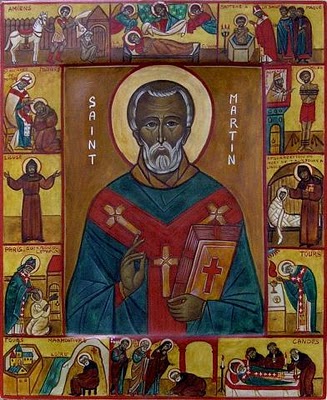
Martinmas marks the burial of St Martin of Tours (316-397 AD).    St. Martin may be well-known for his compassionate gesture of sharing his cloak with a beggar.  This charitable gesture is at the heart of this festival for many Waldorf schools, who hold coat drives and other charitable drives around this festival.

This festival is the middle point between Michaelmas and Christmas; the light of Martinmas fortifies our souls for the dark winter and prepares us for the birth of Christ.  One symbol of this is working with light from lanterns in the traditional Lantern Walk.

Regarding Lantern Walks, the authors of the book “All Year Round” write:  “The traditional way of celebrating Martinmas is with lantern walks or processions, accompanied by singing.  St. Martin recognized the divine spark in the poor man of Amiens, and gave it the protection of his own cloak.  When we make a paper lantern, we, too, may feel that we are giving protection to our own little “flame” that was beginning to shine at Michaelmas, so that we may carry it safely through the dark world.  It may only be a small and fragile light- but every light brings relief to the darkness.”

As a parent, it is important for you to penetrate a festival or holiday and discover what it means to you.  You can then bring that to your small child, and your older children, in a physical way.  If you would like to know more about a Waldorf School perspective regarding St. Martin, one can read this article from the Gateways Journal for Waldorf Early Years teachers:  http://www.waldorflibrary.org/Journal_Articles/GW57martin.pdf.  Here is some information about St. Martin from a Roman Catholic website:  http://www.catholic.org/saints/saint.php?saint_id=81.

We usually host a Lantern Walk every year within our homeschooling group; this year my children walked with their German school but we were sadly not able to make our homeschooling group’s walk.  However, as a special treat, this weekend we are attending a Lantern Walk held by one of the German churches in our area that will include not only the walk but St. Martin on his horse!  This should be lots of fun.

Below find some links for ideas for your own Martinmas celebration.

Specific Resources:

If you would like to know more about a Waldorf School perspective regarding St. Martin, one can read this article from the Gateways Journal for Waldorf Early Years teachers:” http://www.waldorflibrary.org/images/stories/Journal_Articles/GW57martin.pdf

“Lantern Walk Story:” http://www.waldorflibrary.org/images/stories/Journal_Articles/GW3808.pdf

“A Waldorf Early Years Teacher’s Experience with a Lantern Walk: Here is one Waldorf teacher’s experience with a Martinmas Lantern Walk here:” http://www.waldorflibrary.org/images/stories/Journal_Articles/GW53gallardo.pdf

And another story:  http://herbnites.tripod.com/waldorfinspiredschool/id15.html

Examples of Different Kinds of Lanterns to Make:  (German website, but good pictures):  http://www.kikisweb.de/spezial/stmartin/Laternen/laternen.htm

Lantern Walk Songs:  http://astorytellingofcrows.blogspot.com/search/label/lantern%20walk%20songs

Many blessings,

Carrie

Back to Basics: Work Hard On Your Marriage

(This is a note:  Feel free to change the language in this post to match what works for you – partner for spouse, partnership or relationship for marriage.   Onward and upwards now!)

We are still continuing on our “Back to Basics” posts.  I really wanted to include one on the challenge and importance of nurturing your marriage, because family stability is so important for children.

How do you hold onto your spouse and marriage in the midst of raising small children?  It can be really difficult, because as many of you know,  time is little, many times there can be small children waking at all various times and in your bed, and “going out” can be challenging as well.

I see many attachment-minded mothers (and fathers) who seem to replace the intimacy of their marriage with a relationship to their children.  Whilst I love the connection to children, a child is not your spouse. A child is not there to fulfill your adult needs.   A child will be grown up and gone, and you and your partner will be looking at each other across the kitchen table wondering what you all have in common with each other.  Many of you have read my back posts on marriage and know the wise saying of my own friend who talks about preparing for the day the children will be gone from the home starting today.

Here are some of my ideas for building up a marriage during this season of raising children:

I am waiting to hear your ideas in the comment box below!

Many blessings,

Carrie

Back To Basics: Staying At Home and Loving It!

Many mothers struggle with certain areas of cultivating a peaceful family life.  Typically these areas are housecleaning and home maintenance, gentle discipline, and creating a rhythm for their family.  Many mothers tell me that they start off well, and then they stop, and then they start and then they stop.

I have a solution for you in these areas, although it is not a very popular one these days:  stay home!  You need an unhurried pace in which to parent small children, and you also need time to work on yourself and your own development as a part.

Staying at home gives you the time to focus on the things that matter:  connecting with your spouse and children without rushing around stressed; giving your children the healthy foundation of rhythm; and providing you enough time to be home to actually cook nourishing meals and clean your home and take care of your garden.

I wrote a post in May of 2010 that in part read:

I invite you to breathe and ask yourself this question:  How often am I going out of my home?

  • Is it every day and you have children under the age of seven?
  • Is your home and your homeschooling and your parenting where you would like it to be?
  • Could your time of lessons or classes or activities for your small  children be better spent elsewhere at this point?

I understand if you are suffering from depression and really need that social connection and support of other mothers.  I really do understand if you are extremely outgoing like me and just get filled up by being with other mothers and other people…I really do understand!    I wrote a post about Social Isolation for Stay-At-Home mothers here:  https://theparentingpassageway.com/2010/02/24/social-isolation-for-stay-at-home-mothers/

But there has to be a balance, and if you are going out every day and if your under-seven child is involved in a plethora of activities, I just gently am nudging you to explore this.  Boundaries are important, and showing and modeling for your child how to set boundaries and maintain them is REALLY important as they grow up into a world that will most likely have even more blurred lines between personal and professional lives due to increased technology.

I invite you to try to discern what really are  the most essential things in your life, and how the time you spend reflects what is most meaningful to you.  I am working on this right now, and it really is challenging me!

Particularly for the parents of very small under-aged five children, it is easy to get caught up in lessons, classes, and other things.  The ages under five (and under seven and yes, even under age nine!), to me, is an excellent place to experience an  unhurried concept of  time.   They will never have these days again!   There will be so many other years for classes, for lessons and for other activities and for rushing about on a schedule (which is different than the flowing rhythm of being at home).”

Some mothers tell me it is so difficult to stay at home for them.  One post I wrote on this subject that was insanely popular was this one, take a look and refresh your memory:  https://theparentingpassageway.com/2010/05/09/how-can-i-love-staying-at-home-with-my-children/  and this one:  https://theparentingpassageway.com/2009/04/15/but-when-i-stay-homeeverything-falls-apart/

Are you worried about your child and their level of socialization?  In general, for children under the age of 7, I feel less is more.  I wrote about that here:  https://theparentingpassageway.com/2009/09/07/social-experiences-for-a-four-year-old/

Look into your heart and see what is right for your family at this time, in this day.  Your rhythm will change as your children grow, but being home is so important.  You can develop your own will to do this (see here for help: https://theparentingpassageway.com/2010/04/30/the-adult-will-and-how-to-develop-it/)

Many blessings,

Carrie